

Most of us spend the better part of our day tethered to a digital world. Whether you are leaning over a laptop to meet a deadline or scrolling through your phone during a commute, your body is likely locked in a seated position for hours on end. While our minds are busy navigating the internet, our physical frames are often paying a silent price. One of the most common issues arising from this modern lifestyle is the tightening of the hip flexors, a group of muscles that play a crucial role in our mobility and overall postural health. Regularly performing hip flexor stretches is the most effective way to combat this chronic tightness and restore your range of motion.
When these muscles remain shortened for too long, they don’t just feel stiff; they can pull on the pelvis and lower back, leading to a cascade of discomfort that affects how we walk, stand, and even sleep. Prioritizing these movements is not just about flexibility; it is about reclaiming the natural alignment and fluid movement your body was designed for.
Understanding the Hip Flexors and Why They Tighten
Before diving into the movements, it is helpful to understand what we are actually stretching. The hip flexors are a group of muscles toward the front of the hip, including the psoas major and the iliacus. Their primary job is to bring your knee toward your chest or to bend your torso forward at the hip.
When you sit, these muscles stay in a contracted, shortened state. Over months and years of prolonged sitting, the brain essentially “forgets” how to let these muscles relax fully. This chronic tightness can lead to an anterior pelvic tilt, where your hips tilt forward, potentially causing lower back strain and a weakened core. By incorporating specific hip flexor stretches into your daily routine, you help signal to your nervous system that it is safe to release that tension, promoting better circulation and a more upright, confident posture.
1. The Classic Kneeling Hip Flexor Stretch
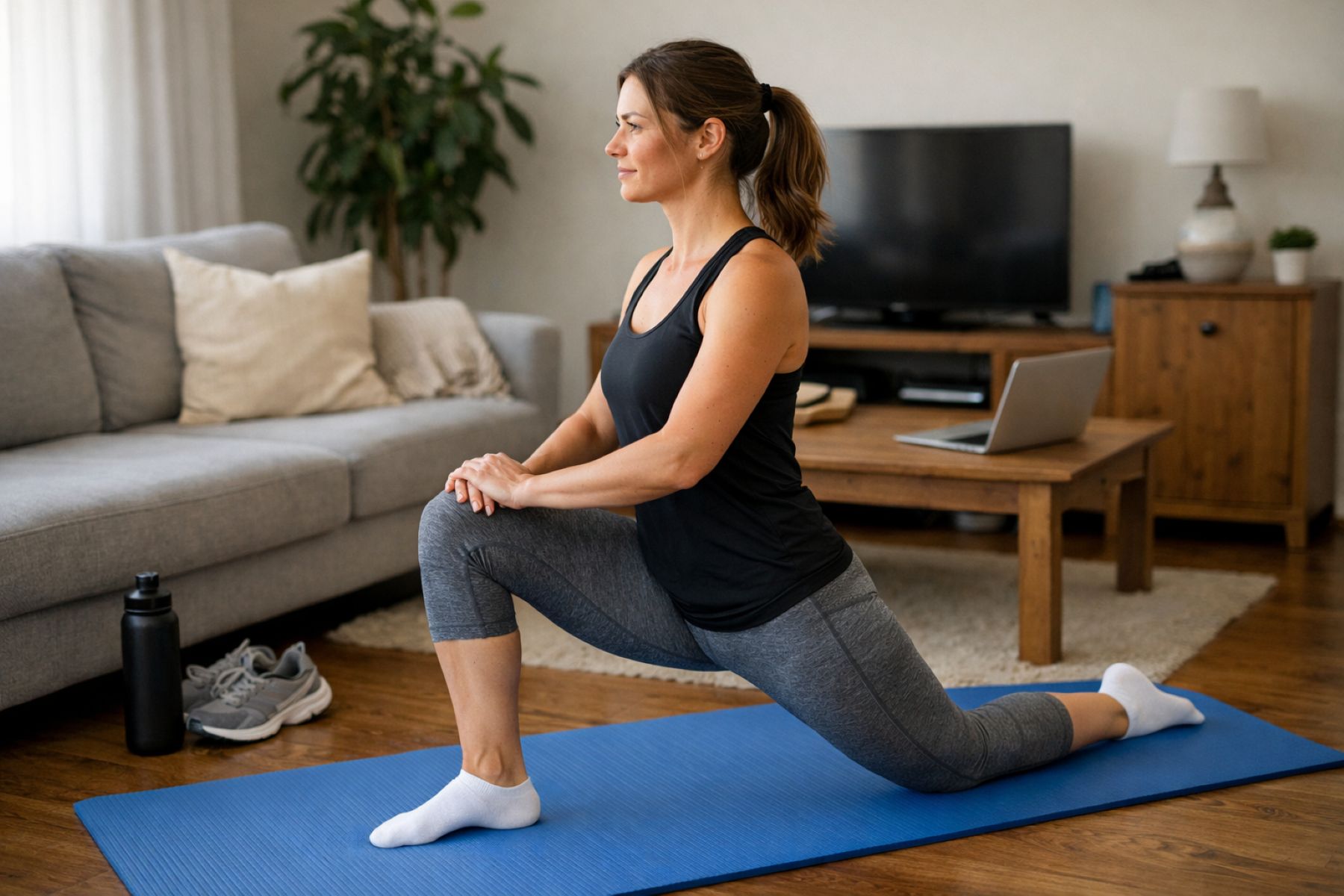
The kneeling stretch is perhaps the most direct way to target the psoas muscle. To begin, find a soft surface or use a yoga mat to protect your knees. Step one foot forward into a lunge position so that your front knee is at a 90-degree angle, while your back knee rests on the floor.
The secret to making this effective is in the pelvis. Instead of simply leaning forward, try to tuck your tailbone slightly under and engage your glutes. This subtle shift ensures the stretch stays in the front of the hip rather than dumping pressure into your lower back. As you gently shift your weight forward, you should feel a deep, steady pull. Breathe deeply and hold for about 30 seconds on each side to allow the tissue to truly respond.
2. Deep Butterfly Stretch for Hips
While many people think of the butterfly stretch primarily for the inner thighs, it is an excellent tool for opening the entire pelvic region. Sit on the floor with your back straight, bring the soles of your feet together, and let your knees fall out to the sides.
Instead of forcing your knees down with your hands, focus on lengthening your spine upward. If you feel comfortable, you can lean forward slightly from the hips while keeping your chest open. This position helps counteract the “closed” feeling we get from sitting with our legs parallel all day. It encourages a gentle external rotation that complements other hip flexor stretches by addressing the surrounding connective tissues (LSI: hip adductors and pelvic floor).
3. Dynamic Standing Leg Lunges
Static stretching is wonderful for relaxation, but dynamic movement is often better for preparing the body for activity. Standing lunges allow you to work on hip mobility while also engaging your balance. Stand tall and take a controlled step forward, lowering your hips until both knees are bent at approximately a 90-degree angle.
By moving in and out of the lunge, you are teaching your muscles to lengthen under tension. This is particularly helpful if you have been sitting at a laptop for hours and need to “wake up” your lower body. Keep your torso upright and avoid leaning forward, as staying vertical maximizes the opening across the front of the trailing hip.
4. Reclined Pigeon Pose for Release
The traditional Pigeon Pose can be intense for many, so the reclined version—often called “Figure Four”—is a much more accessible way to find relief. Lie on your back with your knees bent and feet flat on the floor. Cross your right ankle over your left thigh, just above the knee.
Gently pull your left thigh toward your chest. While this primarily targets the glutes and outer hips, it is essential for overall hip health. When the muscles in the back of the hip are tight, they can force the front muscles to work harder to maintain stability. By releasing the posterior chain, you create more space for the front of the hips to open up, creating a balanced sense of ease throughout the pelvic bowl.
5. Glute Bridge for Active Hip Flexor Stretches
One of the best ways to stretch a muscle is to strengthen its opposite. The glute bridge focuses on hip extension, which is the exact opposite of the seated “flexed” position. Lie on your back with your feet hip-width apart and your arms at your sides.
As you lift your hips toward the ceiling, you are actively stretching the front of the leg while strengthening the glutes and hamstrings. This reciprocal inhibition tells the tight muscles on the front of your body to let go. Try to hold the top position for a few seconds, focusing on a straight line from your shoulders to your knees. It is a powerful way to “reset” your posture after a long day of screen time.
6. Supportive Happy Baby Yoga Pose
This pose might feel a bit playful, but its benefits for hip mobility are significant. Lie on your back and bring your knees toward your chest. Reach for the insides or outsides of your feet, and gently pull your knees toward your armpits while keeping your lower back pressed into the floor.
Happy Baby helps to decompress the lower back and opens the hips in a way that feels safe and supported. If reaching your feet is difficult, you can simply hold onto your shins or the backs of your thighs. The goal is to let gravity do the work, allowing the hips to settle and open naturally without any straining or aggressive pulling.
7. Effective Standing Quad Stretch Variation
The quadriceps and hip flexors are closely linked, and a tight quad often means a tight hip. Stand on one leg—holding onto a chair or wall for balance if needed—and reach back to grab your ankle. Pull your heel toward your glutes, keeping your knees close together.
To turn this into one of your most effective hip flexor stretches, focus on the same pelvic tilt mentioned in the kneeling stretch. Push your hips slightly forward while keeping your upright posture. This variation is incredibly convenient because it can be done anywhere, even in a small office space, providing a quick “reset” button for your body during a busy workday.
Movement and Longevity
Incorporating these hip flexor stretches into your routine is a simple yet profound act of self-care. We often think of exercise as something that requires a gym or an hour of our time, but movement can be integrated into the small gaps of our day. Taking five minutes between meetings to stretch or ending your evening with a few floor poses can significantly reduce the physical stress of a sedentary lifestyle.
Ultimately, your body is a reflection of your habits. By consistently offering your hips the chance to open and lengthen, you are not just preventing pain—you are investing in your future mobility. A more flexible hip means a more resilient back, a stronger core, and a more energized way of moving through the world.