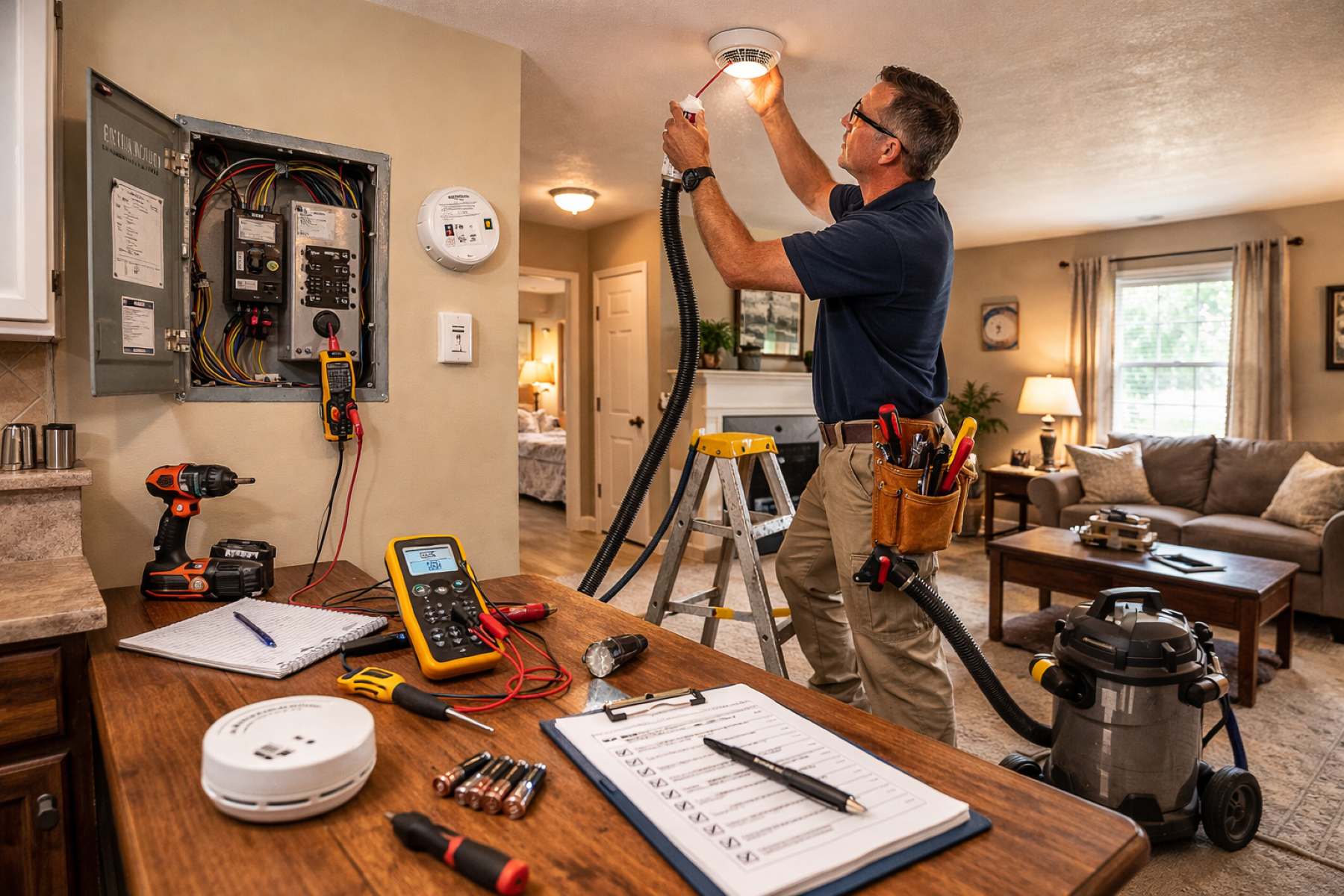
Ensuring your home remains a safe haven requires more than just high-quality locks and sturdy windows. One of the most critical, yet frequently overlooked, components of home safety is the humble smoke alarm. While we often take their silent vigil for granted, these devices are the front line of defense against fire-related emergencies. Regular smoke detector testing is not just a recommendation; it is a fundamental pillar of responsible homeownership that can quite literally save lives.
By staying proactive with your maintenance, you ensure that your early warning system is primed and ready. Whether you are a first-time homeowner or have lived in your property for decades, understanding the nuances of how these devices function—and how they fail—is the first step toward true peace of mind.
Understanding the Importance of Smoke Detector Testing
At its core, smoke detector testing is the process of verifying that your alarm’s sensors, power supply, and audible signals are functioning exactly as designed. Smoke detectors operate using sophisticated sensors—typically ionization or photoelectric technology—to identify combustion particles in the air. Over time, these sensors can become desensitized by dust, humidity, or simple component aging.
Testing goes beyond just pressing a button to hear a beep. It involves a holistic check of the device’s integrity to ensure that, in the event of a fire, the alarm will sound early enough to allow for a safe evacuation. This is especially vital in older properties where outdated technology might not meet modern safety standards.
Identifying Outdated Ionization Sensor Technology
Many older homes are still equipped with legacy ionization sensors. While these are excellent at detecting fast-flaming fires, they can sometimes be slower to respond to smoldering fires, which are common in residential settings. During your routine smoke detector testing, take a moment to identify which technology your units use. If you find you are relying solely on older ionization models, it may be time to consider an upgrade to ensure comprehensive coverage against various types of fire hazards.
Verifying Manufacturer Manufacturing Date Stamps
Every smoke detector has a finite lifespan, typically around ten years. To check the age of your units, remove the device from its mounting bracket and look at the back for a manufacturer’s date stamp. If the date indicates the unit is a decade old or nearing that mark, the internal sensors are likely degraded. Replacing these aged units is a non-negotiable step in maintaining a reliable safety net for your household.
Testing Hardwired System Electrical Integrity
In many modern and renovated homes, smoke detectors are hardwired into the house’s electrical system. However, wires can loosen or corrode over time. When performing smoke detector testing on hardwired units, ensure the “power on” light is glowing steadily. If the unit fails to respond despite having power, there may be an issue with the wiring or the unit’s internal transformer that requires immediate attention.
Replacing Aging Backup Battery Units
Even hardwired systems usually feature a battery backup to ensure functionality during power outages. A common mistake is waiting for the dreaded “low battery” chirp before taking action. A better approach is to replace these batteries annually. Fresh batteries ensure that your smoke detector testing results remain consistent and that your family is protected even when the local grid goes down.
Vacuuming Accumulated Dust from Sensors
It might surprise you how much household dust, cobwebs, and even small insects can migrate into the sensing chamber of an alarm. This accumulation can lead to false alarms or, worse, prevent the sensor from “seeing” actual smoke. As part of your maintenance flow, use a soft brush attachment on your vacuum to gently clear the exterior vents and interior gaps of each unit to keep the pathways clear.
Conducting Professional Aerosol Canister Tests
While the “test” button checks the battery and circuitry, it doesn’t always prove the sensor can actually detect smoke. To bridge this gap, you can use a specialized UL-listed smoke aerosol canister. By spraying a small amount toward the unit, you simulate a real-fire condition. This is a gold standard in smoke detector testing because it confirms the device’s functional ability to recognize airborne particles.
Evaluating Interconnected Alarm Communication Signals
If your home features interconnected alarms, a fire in the basement should trigger the alarm in the upstairs bedroom. During your walkthrough, have a partner stay in a different part of the house while you trigger one unit. Confirming that all alarms sound simultaneously is crucial for large homes where a localized fire might not be audible from several rooms away.
Assessing Alarm Decibel Output Levels
An alarm is only effective if it is loud enough to wake a deep sleeper. Over time, the piezoelectric horn in an alarm can weaken. When you conduct smoke detector testing, listen for a clear, piercing, and unwavering sound. If the alarm sounds muffled, raspy, or faint, the unit’s horn is failing, and the entire device should be replaced immediately to ensure it meets safety decibel standards.
Confirming Strategic Placement Near Bedrooms
Safety standards have evolved, and placement is key. Ensure you have an alarm inside every bedroom, outside every sleeping area, and on every level of the home. During your inspection, if you notice large “dead zones”—such as long hallways without coverage—consider installing additional units. Proper placement ensures that the primary goal in safety is “early detection.”
Reviewing Local Fire Safety Compliance
Building codes and fire safety regulations can change. Periodically check with your local fire department or municipal office to see if there are new requirements for residential properties. Staying compliant not only keeps you safe but can also be a factor in homeowners’ insurance claims. Professional smoke detector testing and documentation show that you are a proactive and responsible homeowner.
Upgrading to Modern Dual-Sensor Models
If your current system is aging, the best move is to upgrade to modern dual-sensor alarms. These units combine ionization and photoelectric technologies into a single device, offering the best protection against both fast-flaming and slow-smoldering fires. This upgrade represents the pinnacle of modern home fire safety and simplifies your long-term smoke detector testing routine.
A Reflective Conclusion on Home Safety
Maintaining your home’s fire safety system is one of the most profound ways you can care for those who live under your roof. While smoke detector testing might seem like a small chore, its impact is monumental. By taking a few minutes every few months to clean, test, and inspect these devices, you are investing in a future where your home remains a place of security.
Remember, a functional smoke detector is the only thing that stands between a manageable incident and a devastating tragedy. Stay vigilant, keep your records updated, and ensure your safety sensors remain sharp.