

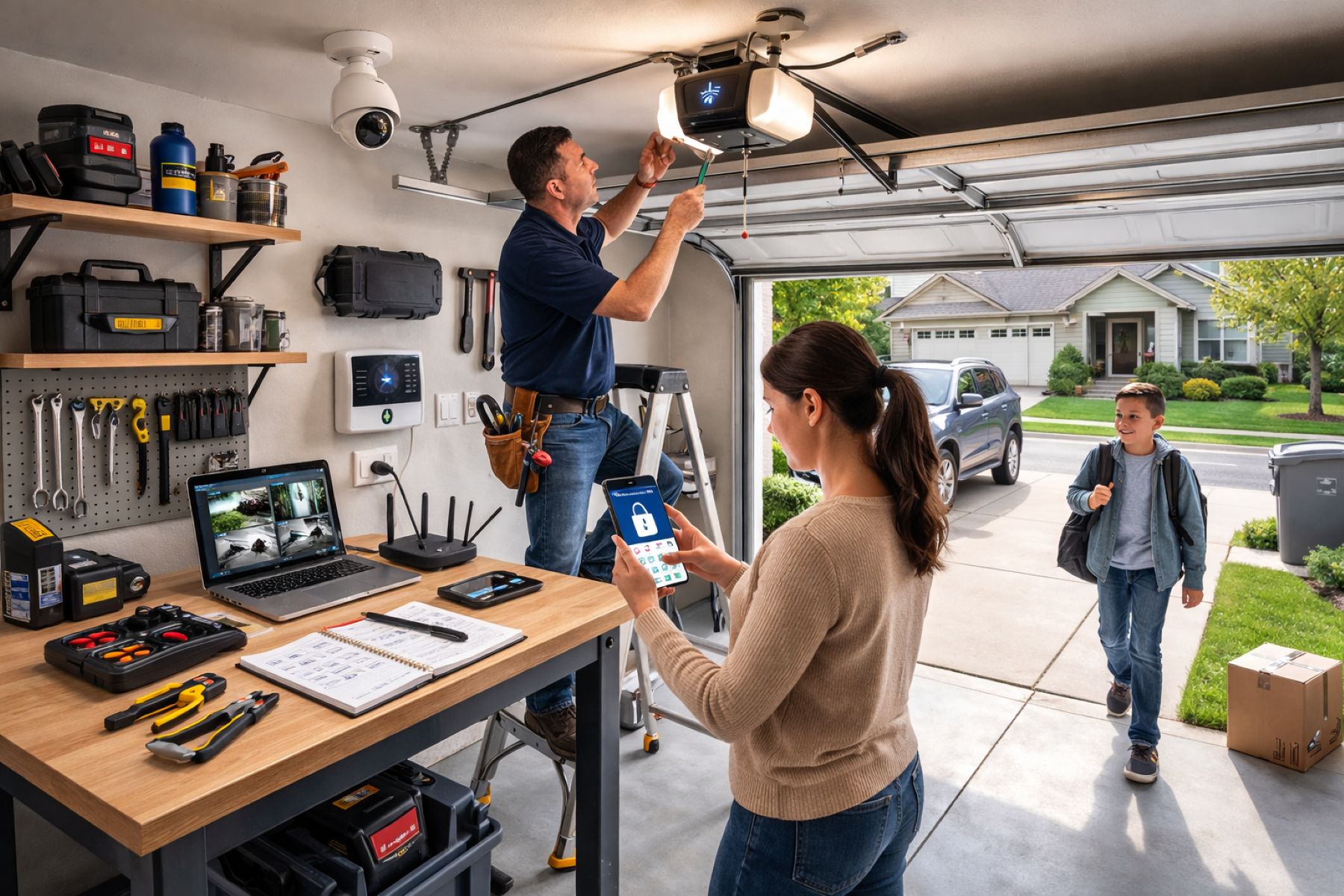
Your garage is often more than just a place to park your car; for many, it serves as a primary entrance to the home, a workshop for weekend projects, or a storage space for valuable equipment. Despite its importance, the garage door is frequently the most overlooked link in a home’s security chain. In an era where we can control our lights and thermostats from miles away, ensuring your garage door security is up to par is the first step toward a truly protected and modern living space.
Understanding the Importance of Home Entry Protection
Before we dive into high-tech upgrades, it is essential to define what we mean by comprehensive protection. At its core, maintaining garage door security refers to the combination of physical hardware, digital protocols, and habitual checks designed to prevent unauthorized entry while ensuring the door functions safely and reliably.
Modern safety isn’t just about a sturdy lock; it’s an ecosystem where physical strength meets digital intelligence. By prioritizing this area, you aren’t just protecting a vehicle—you are safeguarding a major entry point that, if compromised, could give an intruder access to your entire living quarters.
1. Evaluate Current Garage Door Hardware
The most sophisticated software in the world cannot compensate for a rusted hinge or a brittle door panel. Begin your journey by performing a thorough physical audit. Check the tracks for alignment and ensure the rollers move smoothly. If your door is older, the materials themselves might be a vulnerability; reinforced steel or solid wood offers significantly more resistance to forced entry than thin aluminum. Strengthening these physical foundations ensures that your smart upgrades have a solid base to build upon.
2. Assess Existing Wi-Fi Signal Strength
As we move toward a connected home, your garage door’s “intelligence” depends entirely on its connection to your network. Garages are notoriously difficult for Wi-Fi signals to reach due to thick, insulating walls. Before purchasing a smart controller to boost your garage door security, test the signal strength using your smartphone. If the connection is spotty, notifications might lag. Consider installing a dedicated Wi-Fi extender or a mesh node nearby to ensure your system remains online 24/7.
3. Verify Smart Platform Ecosystem Compatibility
There is little more frustrating than buying a high-end device only to find it doesn’t “talk” to the rest of your home. Whether you use Apple HomeKit, Google Home, or Amazon Alexa, ensure your hardware is compatible. A unified system allows you to create “scenes”—for example, a “Goodnight” command that automatically checks the garage and locks the front door simultaneously. This cohesion is the hallmark of a truly secure, modern home.
4. Choose Encrypted Wireless Communication Protocols
When it comes to digital entry, “invisible” protection is as vital as the physical. Older openers often used fixed codes that could be intercepted by “code grabbers.” Modern garage door security systems utilize rolling codes or advanced encryption protocols that change the access key every time the door is used. Look for high-level encryption standards to ensure the signal between your remote and the opener cannot be hijacked.
5. Install High-Definition Motion-Sensing Cameras
Visibility is one of the strongest deterrents to unwanted activity. A high-definition camera covering both the interior and the driveway provides an invaluable layer of protection. Motion-sensing technology ensures you aren’t sorting through hours of empty footage; instead, you get a direct alert the moment someone approaches. Modern cameras also offer two-way audio, allowing you to speak to a delivery driver or warn off a trespasser, adding a proactive element to your garage door security strategy.
6. Implement Multi-Factor Authentication Access
In the digital age, a stolen smartphone shouldn’t mean an open door to your home. Implementing multi-factor authentication (MFA) for your access app adds a critical “second check.” This might involve a fingerprint scan, facial recognition, or a time-sensitive code. While it takes an extra moment to open the door, that small step provides a massive barrier against unauthorized digital access, ensuring that only you control the entry points to your sanctuary.
7. Configure Real-Time Smartphone Alert Notifications
The true power of modern garage door security lies in real-time awareness. Most controllers can be configured to send a push notification the moment the door is moved. This is particularly useful for families, allowing you to know when the kids get home or if a service provider has arrived. More importantly, it alerts you immediately if the door is opened at an unusual hour, allowing you to take action or call for help before a situation escalates.
8. Review Automatic Closing Timer Settings
We have all had that sinking feeling halfway to work: “Did I remember to close the garage?” An automatic closing timer eliminates this anxiety. You can program your system to automatically shut the door if it has been left open for a specific duration. This simple automation acts as a fail-safe against human error, ensuring your home isn’t left exposed because you were in a rush.
9. Check Manual Release Lock Functionality
Every automatic door has a manual release cord—the red handle—for power outages. While necessary, this can be a vulnerability, as some intruders use a “fishing” technique to pull this cord from the outside. Check your manual release and consider installing a shield or a dedicated lock that prevents manipulation from the exterior. Balancing emergency accessibility with robust garage door security is a vital step in a comprehensive safety plan.
10. Update Controller Firmware Regularly
Just like your computer, your smart controller runs on software that requires periodic updates. Manufacturers frequently release “patches” to fix newly discovered vulnerabilities. Set a reminder to check for firmware updates through your manufacturer’s app at least once a quarter. Keeping your software current is one of the easiest ways to defend against the evolving tactics of digital intruders.
11. Monitor Battery Backup Power Systems
Security shouldn’t vanish when the power goes out. Many modern openers come equipped with integrated battery backup systems. These allow the door to function normally even during a localized blackout. Regularly testing this battery—usually by unplugging the unit and seeing if it still operates—ensures that you won’t be locked out or left with an unsecure door during an emergency.
12. Audit Third-Party Application Permissions
Over time, we often grant access to various apps—perhaps a delivery service that has permission to drop packages inside. It is wise to perform a bi-annual audit of who has digital “keys” to your home. Revoke access for any services you no longer use and change guest codes periodically. Managing these digital permissions is fundamental to maintaining a tight perimeter.
Investing time and resources into garage door security is an act of mindfulness for your home and family. By combining physical durability with smart, proactive digital measures, you transform a simple utility entrance into a sophisticated shield. Security is rarely about one single lock; it is about the layers of protection you put in place to ensure your home remains a safe haven.