

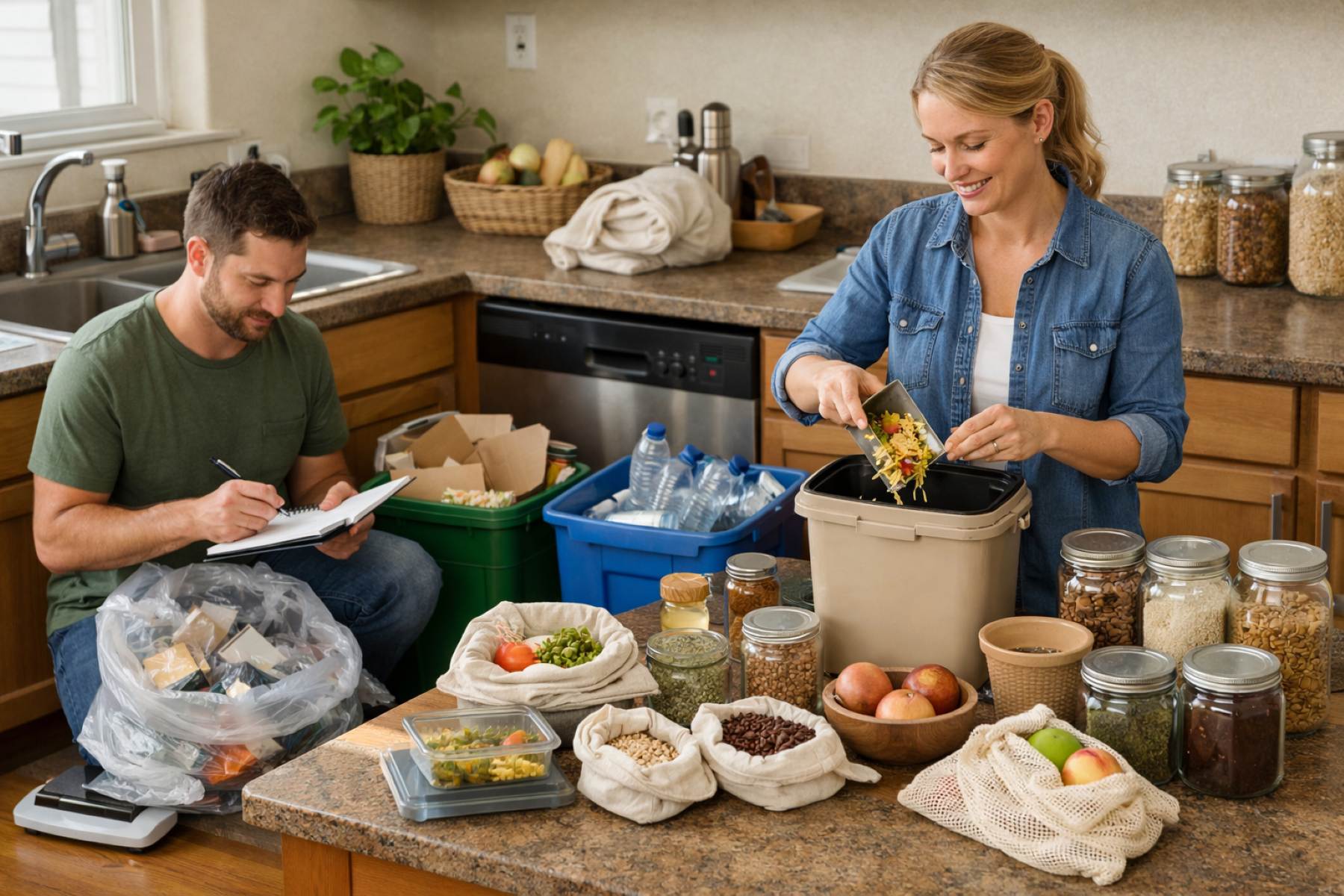
Living a more sustainable life often feels like a mountain to climb, but the truth is that the most significant changes happen right at the base of the peak, in our own kitchens and living rooms. We live in a world designed for convenience, which frequently translates to “disposable.” However, shifting our perspective toward household waste reduction isn’t just about saving the planet; it’s about simplifying our lives, saving money, and creating a home environment that feels intentional rather than cluttered. By embracing small, daily shifts in how we consume and discard, we can transform our homes into hubs of sustainability.
The journey toward a low-waste lifestyle is best guided by the “5 Rs”: Refuse, Reduce, Reuse, Recycle, and Rot. These aren’t just buzzwords; they are a hierarchy of action. When we refuse what we don’t need and reduce what we do, the need for complex recycling systems diminishes. It is about being a conscious gatekeeper of what enters your front door. Whether you are a seasoned environmentalist or just starting to notice how quickly your trash bin fills up, these seven habits offer a practical, empathetic roadmap to a lighter footprint.
Understanding Household Waste Reduction
Before we dive into specific habits, it is helpful to define what household waste reduction truly looks like in a modern context. At its core, it is the practice of minimizing the amount of material sent to landfills or incinerators. This involves looking at the lifecycle of every product we own—from the plastic wrap on a cucumber to the worn-out bristles of a toothbrush.
When we focus on reduction, we are essentially reclaiming control over our consumption. It’s not about achieving “zero waste” overnight, which can be an intimidating and often unrealistic goal. Instead, it is about “less waste.” It is a reflective process where we ask ourselves if there is a more durable, compostable, or reusable alternative to the items we use every day. By understanding the flow of materials through our homes, we can identify the “leaks” where waste is most prevalent and plug them with better habits.
1. Master Meal Planning and the “Use It Up” Mentality
Food waste is one of the largest contributors to the average trash bag, yet it is also one of the easiest to prevent with a little bit of foresight. Many of us fall into the trap of “aspirational buying”—purchasing fresh kale or exotic fruits with the best of intentions, only to find them wilting in the crisper drawer a week later. Mastering the art of meal planning is the ultimate defense against this cycle.
Before you head to the grocery store, take five minutes to audit your pantry and fridge. Use what you already have as the foundation for your next few meals. On a daily basis, try designating a specific “use it up” shelf in your refrigerator. By placing items that are nearing their expiration date or produce that is slightly bruised right at eye level, you ensure they are the first things grabbed for snacks or dinners. This simple organizational shift treats food as the valuable resource it is, rather than a disposable commodity.
2. Swap Single-Use Items for Durable Reusables
The modern home is often filled with “ghost waste”—items we use for mere seconds that then spend centuries in a landfill. Think of paper towels, plastic sandwich bags, and disposable water bottles. Replacing these with durable alternatives is a one-time investment that pays dividends for years. Switching to cloth rags for spills, real glass dishes for parties, and silicone bags for snacks immediately halts a steady stream of trash.
To make this a seamless daily routine, preparation is key. Keep a “sustainability kit” by your front door or in your car, containing reusable shopping bags, a sturdy water bottle, and a travel coffee mug. When these items are easily accessible, you eliminate the “convenience trap” of needing a plastic bag or a paper cup while you’re out running errands. It’s about making the sustainable choice the easiest choice.
3. Compost Organic Waste for Effective Household Waste Reduction
Even with perfect meal planning, some waste is inevitable—think eggshells, coffee grounds, and banana peels. In a landfill, these organic materials are trapped without oxygen, producing methane, a potent greenhouse gas. However, when we allow them to “rot” through composting, they transform into nutrient-rich soil. This is the ultimate way to close the loop in your household waste reduction efforts.
Starting a compost system doesn’t require a massive backyard. Many urban dwellers use small countertop caddies to collect daily scraps, which are then transferred to a worm bin, a community garden, or a local green bin collection service. By separating your organics from your “true” trash, you’ll likely find that your garbage bin no longer smells and needs to be emptied far less frequently. It is a rewarding daily rhythm that turns “trash” into a gift for the earth.
4. Buy in Bulk and Choose Naked Produce
Packaging is often the silent culprit of household clutter. When we shop at traditional supermarkets, we are often paying for the plastic wrap and cardboard boxes as much as the food itself. A more sustainable approach involves seeking out bulk sections where you can fill your own reusable jars or cloth bags with dry goods like pasta, rice, nuts, and lentils.
During your daily or weekly shopping trips, aim for “naked” produce. Choose the loose carrots instead of the ones in the plastic bag, and bring your own mesh produce bags to keep things organized. This simple habit signals to retailers that consumers value the product over the packaging. Not only does this reduce the amount of plastic entering your home, but it also allows you to buy exactly the quantity you need, further reducing potential food waste.
5. Transition to Sustainable Personal Care
The bathroom is often an overlooked area for household waste reduction, yet it is frequently filled with non-recyclable plastic bottles and synthetic materials. Transitioning to a sustainable personal care routine is a journey of swapping liquids for solids. Solid bar soaps, shampoos, and conditioners work just as well as their bottled counterparts but come in minimal or compostable packaging.
In your daily grooming routine, consider the tools you use. A bamboo toothbrush can be composted at the end of its life, whereas a plastic one will exist forever. Similarly, switching to a metal safety razor eliminates the need for disposable plastic cartridges. These changes might feel small, but when you consider how many toothbrushes and razors a person uses in a lifetime, the cumulative impact is staggering.
6. Create Your Own Non-Toxic Cleaning Solutions
Most household cleaning tasks can be tackled with three simple, kitchen-cupboard ingredients: white vinegar, baking soda, and lemon. By making your own cleaners, you bypass the need to constantly buy new plastic spray bottles filled with harsh chemicals. It is a healthier choice for your indoor air quality and a significant win for the environment.
A great daily habit is to keep a multipurpose spray—usually a mix of water and vinegar with a few drops of essential oil—in a glass bottle on your counter. When you run out, you simply refill it from a large gallon of vinegar rather than throwing the bottle away. It’s an empowering way to simplify your chores while ensuring that no unnecessary plastic or chemicals are entering the ecosystem through your drains.
7. The Power of Repairing, Reusing, and Rehoming
In a “throwaway culture,” the act of repairing something is a quiet radicalism. Before tossing a shirt with a loose thread or a chair with a wobbly leg, ask if it can be mended. Keeping a small sewing kit or a basic set of tools allows you to extend the life of your belongings significantly. Even items that are truly beyond repair can often be repurposed—an old t-shirt becomes a cleaning rag, and a glass jar becomes a pen holder.
For items that are still in good shape but no longer serve you, embrace the “rehoming” habit. Utilize “Buy Nothing” groups or local donation centers to ensure your unwanted items find a second life with someone else. This keeps valuable materials in circulation and out of the waste stream. By viewing your possessions as part of a circular economy rather than a linear path to the bin, you foster a deeper appreciation for everything you own.
Embracing household waste reduction is a deeply personal and reflective journey. It isn’t about being perfect; it’s about being better today than we were yesterday. By incorporating these seven habits into your daily life, you create a home that is lighter, cleaner, and more aligned with a sustainable future. You’ll likely find that as your trash bin shrinks, your sense of gratitude for what you have grows.
Every time you refuse a straw, compost a lemon peel, or mend a sock, you are making a vote for the kind of world you want to live in. It is a series of small wins that add up to a significant, positive impact on our collective environment.