

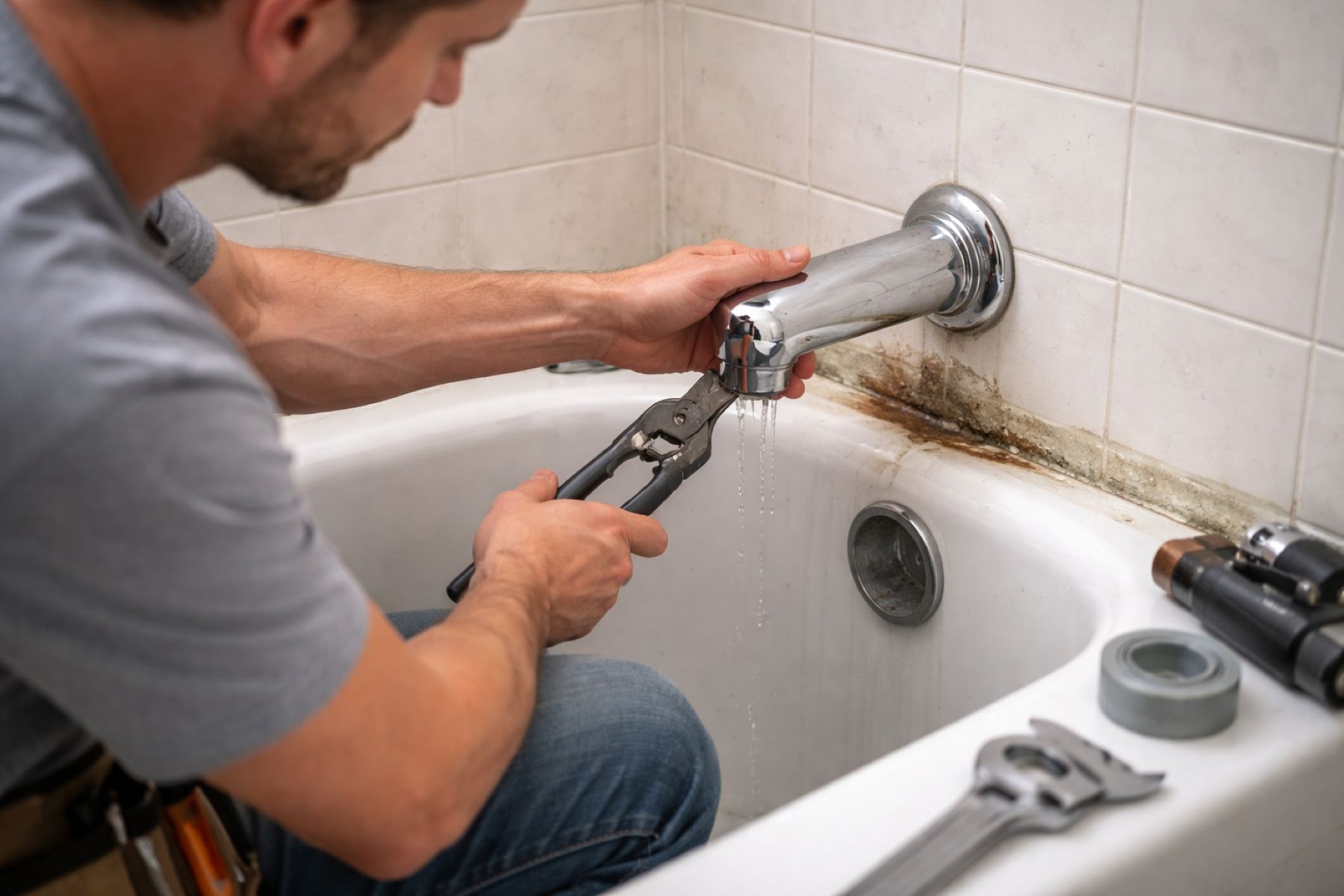
There is a specific kind of rhythmic tapping that can keep a homeowner up at night: the steady, relentless drip of a bathroom fixture. While it might seem like a minor household nuisance, those tiny droplets are often the first ambassadors of a much larger, more expensive problem. Bathtub faucet repair is frequently viewed as a “weekend project” that can be indefinitely postponed, yet ignoring the warning signs can lead to staggering water waste—sometimes exceeding 3,000 gallons a year. Beyond the utility bill, the hidden moisture can silently compromise your home’s structural integrity, inviting mold and wood rot into the very bones of your bathroom.
Understanding the Basics of Bathtub Faucet Repair
Before diving into the symptoms of a failing system, it is helpful to understand what bathtub faucet repair actually entails. At its core, this process involves diagnosing and fixing the components that control the flow, temperature, and containment of water within your bathing fixture.
This could range from simple tasks, like replacing a worn-out rubber washer, to complex surgical plumbing that involves accessing the valve body behind your wall tiles. Because the bathtub is a high-use area, the internal mechanisms—such as cartridges, O-rings, and valve seats—are under constant pressure and friction, making wear and tear an inevitable part of home ownership.
Persistent Leaks and the Need for Bathtub Faucet Repair
The most obvious sign that you need professional help is a leak that simply refuses to quit. We have all been there: you head to the hardware store, replace a washer or a cartridge, and tighten everything back up, only to hear that familiar “drip, drip, drip” an hour later. When DIY fixes fail to stop the flow, it usually indicates that the issue isn’t just a soft component, but a structural failure within the faucet itself.
A professional plumber can identify if the valve seat—the brass part the washer presses against—has become pitted or corroded. In some cases, the valve body itself might have developed a hairline crack. When these deeper internal components fail, performing a standard bathtub faucet repair becomes more technical, and continuing to force the handle can lead to a sudden, catastrophic burst.
Visible Water Damage, Mold, or Mildew
Sometimes the most dangerous leaks are the ones you cannot see. If you begin to notice damp spots on the drywall, mysterious water stains on the ceiling directly below the bathroom, or an aggressive growth of mold on your grout, your faucet is likely leaking behind the scenes. This “hidden” leakage often occurs at the connection point between the faucet and the internal plumbing lines.
Because this moisture is trapped in a dark, poorly ventilated space behind your shower walls, it creates the perfect ecosystem for mold and mildew. By the time you see the dark spots on your tile or smell a musty odor, the water may have already begun to soften the wooden studs or subflooring. At this stage, bathtub faucet repair is no longer just about the plumbing; it is about protecting the health of your home’s environment.
A Significant or Unexplained Rise in Water Bills
Financial shifts are often the first “symptom” of a plumbing failure that homeowners notice. If you haven’t changed your daily habits—no extra guests, no new lawn watering schedule—yet your monthly water bill is steadily climbing, your bathtub might be the culprit. A leak doesn’t have to be a spray to be expensive; a steady stream the size of a pencil lead can waste hundreds of gallons in a single week.
Tracking your water meter during a period when no water is being used can confirm your suspicions. If the meter is spinning while every tap is off, you have a “silent thief” in your pipes. Professional bathtub faucet repair ensures that the leak is found and sealed correctly, paying for itself over time through the savings on your utility statements.
Fluctuations in Water Pressure
We often associate low water pressure with a city-wide issue or a problem with the water heater, but it can be localized specifically to your bathtub. If your showerhead feels like a gentle mist instead of a steady stream, or if the tub takes twice as long to fill as it used to, there is likely a blockage or a breach.
Low pressure can be caused by a buildup of mineral sediment within the faucet’s internal diverter or a failing cartridge that isn’t opening fully. More concerningly, it could signal a leak in the supply line before the water even reaches the spout. A professional can flush the system or replace the necessary valves to restore that invigorating flow you expect from a hot bath.
Rust, Corrosion, and Mineral Crust
Take a close look at the base of your faucet handles and the tip of the spout. Do you see a greenish-white crust or reddish-brown flakes? This is more than just an aesthetic issue. Heavy mineral buildup and corrosion are signs that the metal components are reaching the end of their lifespan.
Corrosion acts like an abrasive, slowly eating away at the threads that hold your faucet together. Once the metal is compromised, the fixture becomes brittle. If you try to force a corroded handle, it could snap off entirely, leaving you with a geyser and no way to shut it off. Professional replacement or deep-cleaning of these components is an essential part of a comprehensive bathtub faucet repair strategy.
Strange Noises During Operation
Your plumbing should be relatively quiet, but a failing faucet often finds its voice through squeaking, screeching, or whistling sounds. These noises are usually the result of high-velocity water forcing its way through a narrowed opening or vibrating a loose internal part.
A high-pitched whistle often points to a worn-out washer that has become distorted, while a “thumping” sound when you turn the water off (known as water hammer) can indicate that your pipes aren’t properly secured or that the faucet’s internal pressure-balancing valve is failing. These sounds are your plumbing’s way of crying for help before a complete mechanical failure occurs.
Difficulty Turning Handles or Unresponsive Controls
A bathtub faucet should operate smoothly, requiring very little effort to start or stop the flow of water. If you find yourself “fighting” the handle—experiencing stiffness, grinding, or a handle that feels completely loose and “stripped”—the internal stem or cartridge has likely reached its limit.
This loss of control is particularly frustrating when you cannot get the temperature quite right or when the faucet continues to run because the handle won’t fully engage the “off” position. Professionals can lubricate or replace these mechanical assemblies, ensuring that your bathroom remains a place of relaxation rather than a source of physical frustration.
While it is tempting to try a quick fix with some plumber’s tape, knowing when to call in a specialist is the hallmark of a savvy homeowner. If a leak persists after you have replaced the basic seals, or if you suspect the leak is occurring behind the wall where you cannot reach it, it is time to seek professional bathtub faucet repair.
A qualified plumber brings the specialized tools and diagnostic experience to ensure the job is done right the first time. They can offer peace of mind by checking the surrounding structure for moisture and ensuring that your new or repaired fixture is up to modern efficiency standards. By addressing these seven warning signs early, you protect your home, your wallet, and your peace of mind.