

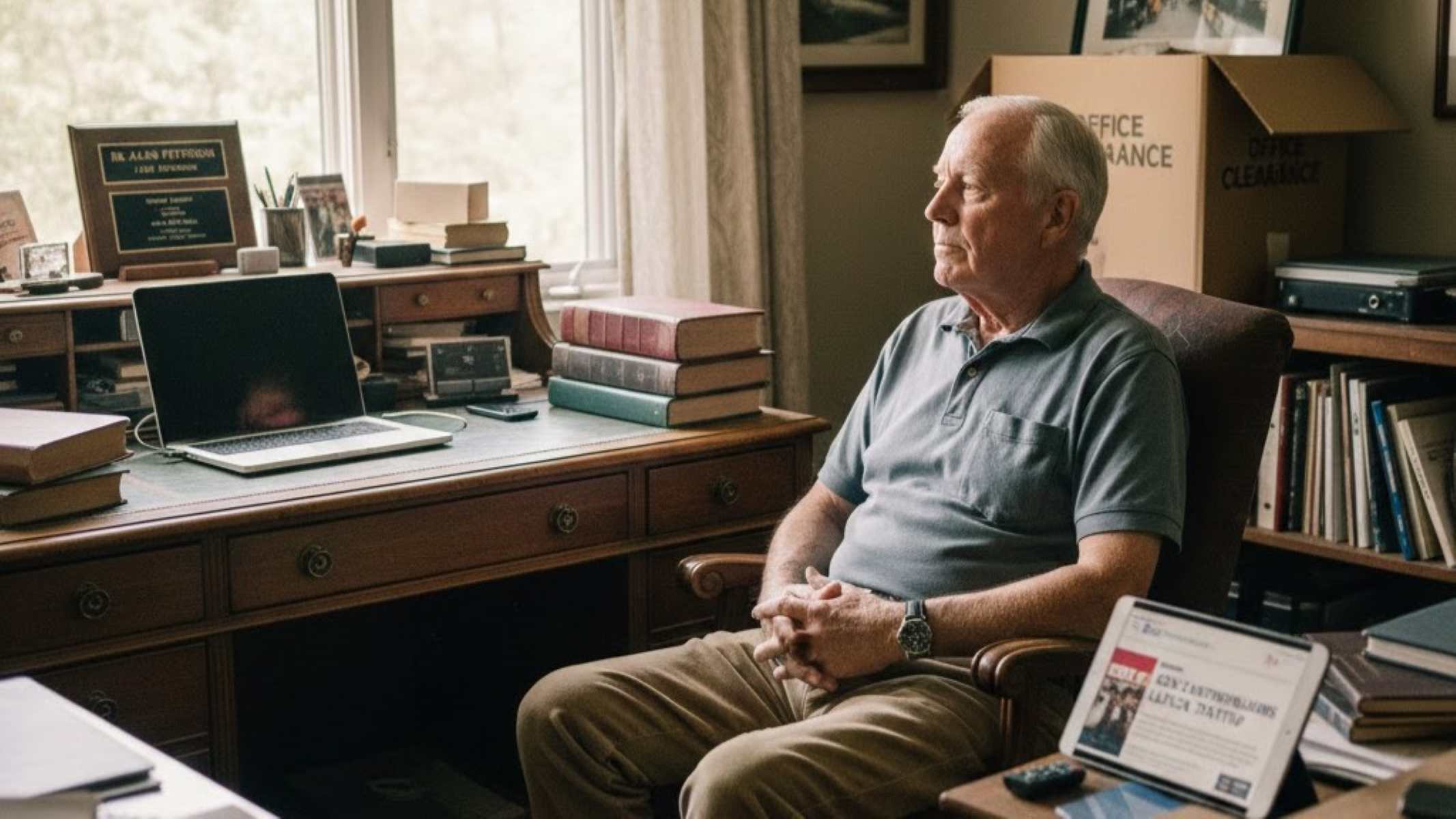
Middleportal.com – For decades, the goal was clear: work hard, save diligently, and eventually cross the finish line into a well-deserved retirement. For many in the Baby Boomer generation, that finish line has finally arrived. However, as the initial excitement of leisure fades, a quieter and more complex challenge often takes its place. This phenomenon, frequently described as a Baby Boomer retirement identity crisis, suggests that while the bank account may be ready for retirement, the psyche often is not.
Understanding the Baby Boomer Retirement Identity Crisis
A Baby Boomer retirement identity crisis is a period of psychological distress or confusion that occurs when an individual transitions out of the workforce and loses the primary source of their social status, daily structure, and self-definition. Because this generation often entered a labor market that prized long-term loyalty and deep professional immersion, their sense of “who they are” became inextricably linked to “what they do.” When the job disappears, many find themselves staring into a mirror and seeing a stranger.
The Weight of Relinquishing Professional Titles
For many professionals, a title is more than just a label on a business card; it is a suit of armor worn for forty years. Whether someone was a “Senior Vice President,” a “Lead Engineer,” or a “Master Educator,” that title commanded a specific type of respect and established a clear place in the social hierarchy. Stepping away from these roles requires a grieving process that many are unprepared for. Without the title, there is a sudden, jarring shift from being a person of influence to feeling like just another face in the crowd.
The Quiet Loss of Workplace Social Circles
We often underestimate how much of our social “fuel” comes from the office coffee machine or the casual banter before a meeting begins. For Baby Boomers, the workplace served as the primary hub for community. Losing daily workplace social interactions can lead to a profound sense of isolation. When the professional emails stop and the Slack notifications go silent, the realization hits that many of those relationships were built on proximity rather than deep, external friendship, leaving a significant social void.
When the Structural Routine Vanishes
Humans are creatures of habit, and the 9-to-5 grind provides a reliable internal clock. When that structure vanishes, the sheer expanse of an open calendar can feel more daunting than relaxing. Without the anchor of a morning commute or a deadline, time begins to blur. This loss of routine often results in a “drift” where days disappear into a haze of low-energy activities, making it difficult to maintain the mental discipline that once came so naturally.
The Fading Echo of Industry Influence
There is a unique sting in watching the industry you helped build move forward without you. As Baby Boomers retire, they often experience the fading of their influence within professional circles. Decisions are made, technologies evolve, and strategies shift—all without their input. This feeling of being “out of the loop” can create a sense of obsolescence, making it feel as though the world is moving at a speed that no longer has room for their expertise.
Reevaluating Post-Career Self-Worth
In a culture that frequently equates value with economic output, struggling with post-career self-worth is a common hurdle. If a person’s value was previously measured by quarterly results or successful projects, they may find it difficult to feel “worthy” while sitting in a garden or reading a book. Learning to decouple human value from productivity is perhaps the most significant psychological shift required in the retirement journey.
The Missing Weight of Productivity
There is a specific dopamine hit that comes from crossing an item off a to-do list or solving a complex problem. Retirees often find themselves missing the feeling of productivity—that sense of being a “useful” member of society. Without a tangible “output,” many Boomers feel a sense of guilt during leisure time, as if they are breaking a lifelong rule about staying busy and being effective.
The Reality of Social Circle Contraction
Retirement often coincides with a natural narrowing of one’s world. As colleagues move on and life circumstances change, many face a sudden social circle contraction. Rebuilding a community from scratch at age 65 or 70 requires a level of social extroversion that may have been dormant for years. This contraction can lead to a “loneliness epidemic” among retirees if not addressed with intentionality and effort.
Navigating Domestic Role Adjustments
The shift from the boardroom to the living room can create unexpected domestic role adjustment tension. Couples who were used to seeing each other for only a few hours a day suddenly find themselves sharing the same space 24/7. This “roommate fatigue” can lead to friction as partners renegotiate boundaries, chores, and personal space in a home that has suddenly become the primary headquarters for two people with very different ideas of leisure.
Cultivating Hobbies Beyond the Office
One of the greatest risks to a smooth retirement is lacking non-work-related hobbies. For decades, “the work” was the hobby, the passion, and the distraction. Those who arrive at retirement without a robust set of interests often find that golf or travel only fills so much time. Finding a new “obsession” that provides genuine intellectual or physical stimulation is essential to preventing the mental stagnation that often triggers an identity crisis.
Feeling Disconnected from Modern Culture
The world changes rapidly, and the workplace is often the primary bridge that keeps older adults connected to modern culture, technology, and social shifts. Without that daily immersion, some retirees feel a growing disconnect from the “current” world. This can manifest as a feeling of being a “relic” or an outsider, which further fuels the desire to retreat rather than engage with an evolving society.
Confronting the Physicality of Aging
Retirement is a milestone that forces an individual to confront the reality of aging. It is a transition that serves as a chronological marker, signaling the move into the “third act” of life. This realization can be heavy, bringing up reflections on mortality and the physical limitations that may start to appear, making the search for mental and spiritual vitality more urgent than ever before.
The Devaluation of Institutional Knowledge
It can be heartbreaking to feel that a lifetime of institutional knowledge is being discarded. As companies prioritize “young talent” and “disruption,” the wisdom that Baby Boomers spent decades accumulating can feel undervalued. Finding ways to mentor others or consult can help bridge this gap, allowing that hard-earned knowledge to find a new home where it is still appreciated.
Searching for New Meaningful Contributions
The key to overcoming this crisis lies in searching for new meaningful contributions. Retirement should not be seen as a “withdrawal” from life, but rather a “re-allocation” of energy. Whether through volunteering, starting a small passion project, or becoming a pillar of a local community organization, finding a way to contribute to something larger than oneself is the ultimate cure for a loss of purpose.
Navigating the Psychological Void of Ambition
For the high-achiever, ambition doesn’t simply turn off when a pension kicks in. Navigating the void of ambition requires finding new, non-competitive ways to feel a sense of growth. This might mean learning a new language, mastering an instrument, or focusing on personal health goals. The goal is to redirect the “climbing” instinct toward internal fulfillment rather than external promotion.
Overcoming the Psychological Attachment to Labor
Ultimately, moving past a retirement identity crisis requires overcoming the deep-seated psychological attachment to labor. We are more than our jobs, and our legacy is more than our resumes. By embracing a life defined by presence, connection, and curiosity, Baby Boomers can turn these years into a period of profound personal reinvention, proving that the best chapters of life aren’t always the ones spent in the office.