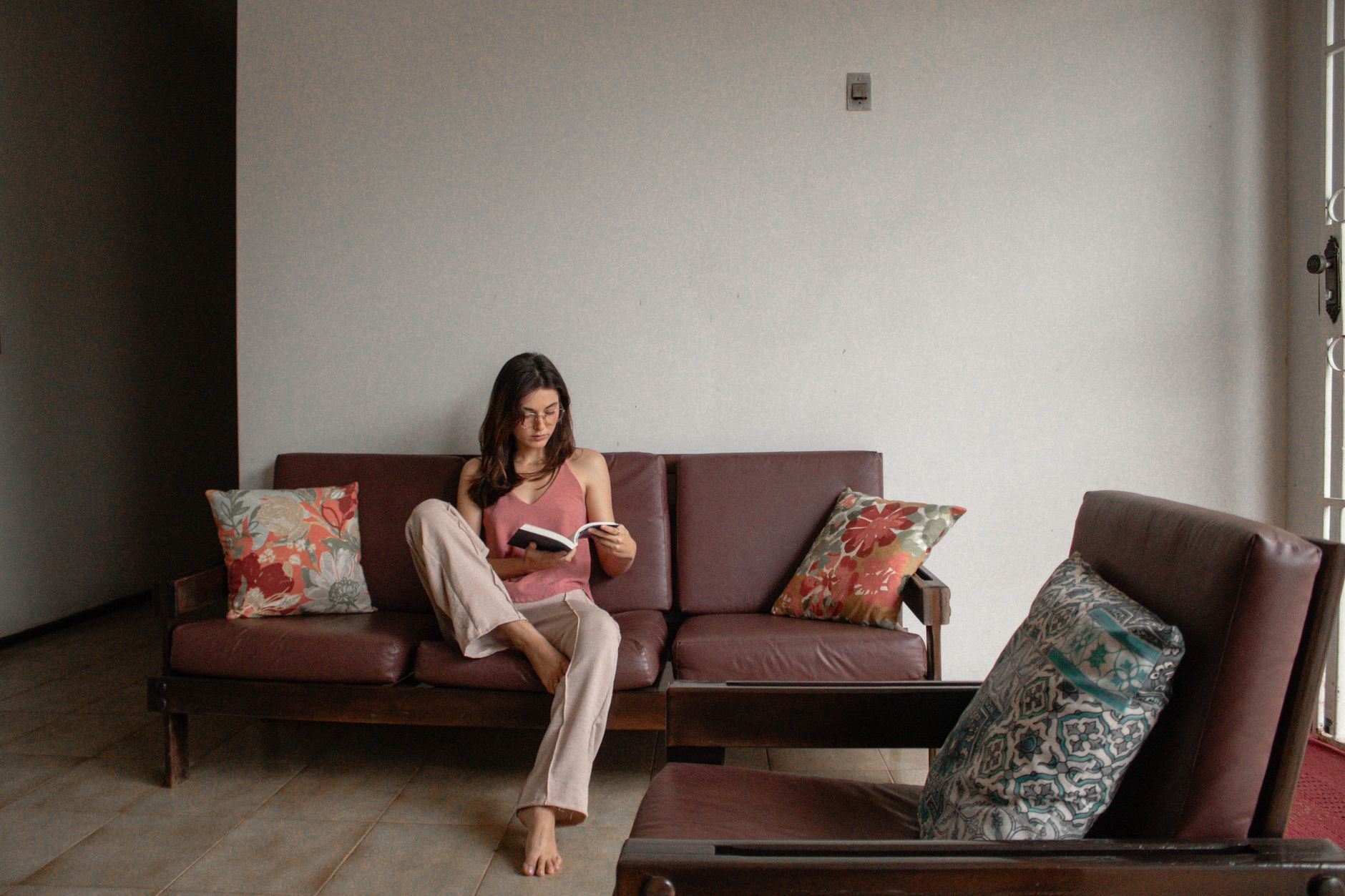
For decades, the cultural script has been remarkably consistent: you date, you fall in love, you move in together, and eventually you build a shared life under one roof. Cohabitation has long been treated as the natural checkpoint on the road to partnership—a rite of passage that signals seriousness, commitment, and maturity. But a quiet shift is underway. A growing number of adults are consciously stepping off that conveyor belt, choosing instead to build lives on their own terms. They are not antisocial or lovelorn; they are simply discovering the benefits of living alone long term, and they are deciding that this arrangement is not a phase to be outgrown but a lifestyle worth keeping for good.
This isn’t a story about loneliness or giving up on love. It’s a story about self-knowledge—about people who have tried shared living, understood what it costs them, and made peace with a different path. The solo living lifestyle is no longer a stopgap between relationships. For many, it is the destination.
The Myth That Living Alone Is a Problem to Be Solved
One of the biggest hurdles to embracing solo living is the stigma attached to it. Well-meaning friends and relatives often treat living alone as a temporary condition, something to be fixed rather than chosen. Questions like “But aren’t you lonely?” or “When are you going to settle down?” reveal an assumption that still runs deep in society: that living alone is inherently incomplete.
The data, however, tells a more nuanced story. According to the U.S. Census Bureau, more than a quarter of all American households are now single-person households—a figure that has climbed steadily over the past several decades. Similar trends are visible across Europe and parts of Asia, where urbanization, longer life expectancy, and changing social norms have reshaped how people live. In many major cities, one-person households now make up a substantial share of all homes.
What this means is that living alone is no longer an outlier. It is a mainstream reality that public policy, housing markets, and social attitudes are still catching up to. The people choosing this life are not broken; they are early adopters of a lifestyle that society is only beginning to understand.
Why More People Are Choosing Not to Cohabitate
The decision to forgo cohabitation is rarely made in a vacuum. It usually emerges from a combination of personal experience, practical considerations, and a quiet reassessment of what a good life actually looks like.
Many people who choose not to cohabitate have lived with partners before—and they know the cost. Shared living often involves invisible labor: negotiating chores, managing each other’s moods, compromising on everything from thermostat settings to weekend plans. For some, the constant micro-negotiation of daily life drains energy that could be spent on work, creativity, or simply rest.
Others arrive at the decision through observation. They watch friends move in with partners and gradually lose pieces of themselves—hobbies shelved, friendships neglected, routines reshaped around someone else’s needs. The lesson isn’t that cohabitation is always bad, but that it is not automatically good. It is a trade-off, and not everyone wants to make that trade.
There is also a financial dimension that is often oversimplified. Yes, sharing a home can reduce costs, but it can also create financial entanglement that is difficult to unwind. For people who value autonomy over their money and their space, the premium they pay for independence feels worth it. The calculation is not just about rent; it is about control over one’s own life.
The Real Benefits of Living Alone Long Term
When people talk about the benefits of living alone long term, the conversation often starts with the obvious: no one else’s mess, no arguments over dishes, no compromises on decor. But the deeper benefits run far beyond domestic convenience.
Deep, Uninterrupted Self-Knowledge
Living alone creates space for self-reflection in a way that shared living rarely allows. When you are the only person in your home, you begin to notice your own rhythms—when you are most productive, what you actually enjoy doing on a quiet evening, what you need when you are stressed. This kind of self-knowledge is difficult to develop when your environment is constantly shaped by someone else’s presence.
Over time, this awareness compounds. People who live alone for years often report a stronger sense of identity and a clearer understanding of their own boundaries. They know what they will and won’t tolerate, not because they read it in a book, but because they have had the space to test it.
Emotional Regulation on Your Own Terms
Shared living inevitably involves emotional labor. You manage your partner’s stress, navigate disagreements in real time, and adjust your behavior to keep the peace. For many people, this is manageable. For others—particularly those who are introverted, highly sensitive, or recovering from difficult relationships—the constant emotional negotiation is exhausting.
Living alone offers something valuable: the ability to process emotions privately and at your own pace. There is no audience to your bad days, no need to explain why you need silence, no pressure to perform happiness when you are simply tired. Over the long term, this creates a kind of emotional steadiness that many solo dwellers describe as one of the most underrated aspects of their lifestyle.
The Freedom to Design Your Own Days
Perhaps the most tangible benefit of the solo living lifestyle is the freedom to structure your time however you like. You can wake up early and make noise without guilt. You can stay up late reading without disturbing anyone. You can decide on a Tuesday evening to rearrange your furniture or start a new hobby or simply do nothing at all.
This freedom is not trivial. It is the foundation of a life that feels genuinely yours. For people who have spent years accommodating others, the ability to design their own days can feel like a quiet liberation—one they are reluctant to give up.
The Financial Reality of Solo Living
It would be dishonest to pretend that living alone is cheap. In most cities, single-person households bear a higher per-person cost for housing, utilities, and groceries. There is no one to split the rent with, no one to share the internet bill, no economies of scale.
But the financial picture is more complex than it first appears. People who live alone often report better control over their spending, because they are not constantly navigating shared expenses or compromising on purchases. They are also less likely to make major financial decisions under pressure from a partner—buying a home they can’t really afford, for example, or taking on debt to keep up with a shared lifestyle.
For those who plan carefully, solo living can be financially sustainable, even comfortable. Many solo dwellers choose smaller homes, embrace minimalism, and prioritize spending on experiences and activities that genuinely matter to them. The result is often a simpler financial life with fewer hidden costs—both monetary and emotional.
What Living Alone Is Not
It is important to draw a clear distinction between choosing to live alone and being isolated. The two are not the same, and conflating them does a disservice to the many people who live alone and maintain rich, connected lives.
Solo dwellers are not necessarily lonely. Research on loneliness suggests that the quality of social connections matters far more than the number of people in one’s household. Many people who live alone have deep friendships, strong family ties, and active social lives. They simply choose not to share their living space—a distinction that is often lost in public conversation.
Nor is living alone a rejection of intimacy. Many solo dwellers maintain romantic relationships, sometimes in the form of “living apart together” arrangements, where partners commit to each other without merging their homes. This model is increasingly common among older adults and people who have already raised families. It allows for closeness without the daily friction of cohabitation, and for many couples, it works remarkably well.
The Quiet Freedom of Saying Yes to Yourself
At its core, embracing solo living is an act of self-respect. It is a decision to stop treating your own needs as negotiable. It is a recognition that you are allowed to want what you want—even if what you want is a quiet apartment, a bed that is exactly as firm as you like it, and an evening that unfolds without negotiation.
This is the quiet freedom that solo dwellers talk about: not a dramatic rebellion, but a gentle, persistent alignment with oneself. It is the freedom to close the door at the end of the day and know that the space behind it is entirely yours.
For some, this freedom is temporary—a season of healing, a period of focus, a way station before the next chapter. For others, it is permanent. And that is okay. The decision not to cohabitate is not a failure to launch. It is a clear-eyed choice about what kind of life fits.
Conclusion: A Life That Fits
The growing acceptance of the solo living lifestyle reflects a broader cultural shift: a move away from one-size-fits-all life scripts and toward more individualized versions of adulthood. Not everyone is meant to share a home, and not every relationship needs to be measured by whether it leads to a shared address.
For those who have found peace in living alone, the message is simple: you are not doing it wrong. The benefits of living alone long term—the self-knowledge, the emotional space, the freedom to design your days—are real, and they are worth protecting. Choosing not to cohabitate is not a rejection of connection. It is a commitment to a life that fits, built on your own terms, one quiet evening at a time.