In today’s fast-paced and hyper-connected world, raising children has evolved dramatically. Modern parents have access to endless parenting books, expert podcasts, and real-time advice at their fingertips. Naturally, this comes with a deep desire to give children the absolute best start in life, protect them from harm, and ensure their future success. However, a fine line often blurs the boundary between being deeply involved and crossing over into over-parenting.
This intense style of raising children, widely known as “helicopter parenting,” has become a growing phenomenon. Named after the way parents hover closely overhead, constantly watching, managing, and intervening in every aspect of their child’s life, this approach stems from the purest form of love and concern. Yet, psychological studies increasingly show that excessive hovering can inadvertently hinder a child’s path to independence. Recognizing these patterns is the first step toward fostering a healthier, more balanced dynamic at home.
Understanding the Roots of Modern Over-Parenting
To understand why so many adults fall into the trap of over-involvement, it helps to look at the cultural and societal shifts over the past few decades. The modern workplace is more competitive than ever, university admissions have reached historic levels of selectivity, and the 24-hour news cycle constantly amplifies potential dangers in the outside world.
Parents absorb this pressure and channel it directly into their children’s daily routines. The fear of failure—both the child’s and the parent’s—creates an environment of high stakes. When parents believe that one wrong move, a single bad grade, or a missed opportunity could permanently derail their child’s future, the instinct to take control becomes overwhelming.
However, child development experts emphasize that resilience is built through weathering minor storms, facing natural consequences, and occasionally failing. When adults step in to cushion every blow, children miss out on vital life lessons.
Key Helicopter Parent Signs to Watch For
Identifying over-parenting behaviors requires radical honesty. Because these actions are driven by good intentions, parents rarely view themselves as overly controlling. Instead, they see themselves as supportive advocates. Consider these common behavioral patterns that often signal a shift into helicopter parenting.
Solving Every Conflict and Minor Dispute
Children inevitably face social friction, whether it is a disagreement over a toy on the playground or a misunderstanding with a teammate. A balanced parent acts as a sounding board, guiding the child on how to express their feelings and resolve the issue independently. In contrast, a helicopter parent immediately steps into the arena, contacting teachers, coaches, or other parents to fix the problem directly. While this shields the child from immediate discomfort, it deprives them of developing essential conflict-resolution skills.
Over-Scheduling Every Moment of the Day
Walk into any suburban neighborhood, and you will likely see children rushed from piano lessons to soccer practice, followed by tutoring and competitive robotics. While extracurricular activities offer tremendous enrichment, over-scheduling leaves zero room for unstructured free play or boredom. Free play is where children learn creativity, self-regulation, and how to entertain themselves. When a parent dictates every hour of the day, the child never learns how to manage their own time or initiate their own interests.
Managing Homework and School Projects to Perfection
It is completely normal to help a young child with difficult homework or explain a complex scientific concept. However, when a parent takes over a school project entirely to ensure it earns an “A,” the learning objective is lost. Helicopter parents frequently proofread, rewrite, and construct assignments to meet their own high standards. This sends an implicit message to the child: “I don’t trust that you are capable of doing this on your own.”
Hovering During Risk-Free Play
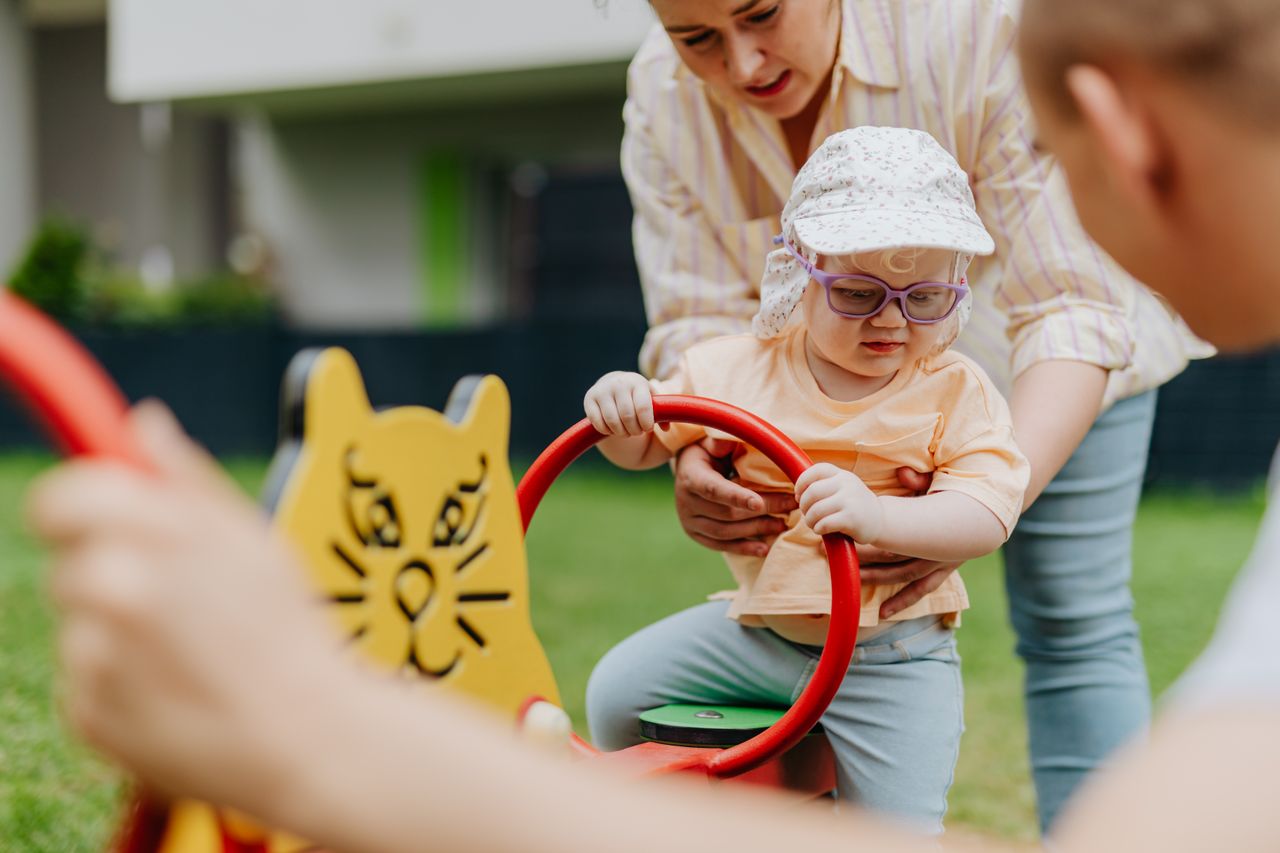
Watch a group of children at a park, and you will often hear a chorus of warnings: “Be careful!”, “Don’t climb too high!”, or “Slow down!” While safety is paramount, constantly hovering over children during low-risk activities teaches them to view the world through a lens of fear and anxiety. Kids need to scrape their knees, test their physical boundaries, and learn how to assess risk independently.
The Psychological Impact on Developing Minds
While the immediate goal of over-parenting is to secure a smooth and successful path for the child, the long-term psychological consequences can be counterproductive. Research in developmental psychology highlights several notable impacts on children who grow up with hyper-involved caregivers.
Children subjected to constant management often struggle with low self-efficacy—the belief in one’s ability to succeed and handle challenges. Because they have rarely been allowed to navigate difficulties on their own, they internalize the belief that they are incompetent without adult assistance. This frequently translates into heightened anxiety, perfectionism, and a paralyzing fear of failure as they transition into adolescence and young adulthood.
Furthermore, college professors and employers increasingly report a phenomenon among young adults entering the workforce who lack basic independence. Known as “failure to launch,” these young individuals may struggle to make simple decisions, manage personal finances, or handle constructive criticism from a boss without calling a parent to intervene.
How to Balance Protection with Healthy Independence
Recognizing helicopter parent signs in your own behavior is not a reason for guilt. Parenting is a continuous learning curve, and adapting your approach is entirely possible at any stage of your child’s development. Achieving the right balance means shifting from a management mindset to a mentorship mindset.
1. Embrace the Power of Natural Consequences
One of the hardest parts of parenting is watching your child experience disappointment or discomfort. Yet, forgetting a lunchbox at home, receiving a lower grade after failing to study, or missing a game due to poor time management are powerful teachers. Unless the situation involves physical harm or long-term danger, step back and let the natural consequence play out. Afterward, use the moment as a calm, supportive conversation about what can be learned.
2. Shift from Direct Intervention to Guided Problem-Solving
When your child comes to you with a problem—whether it is a dispute with a friend or a difficult school assignment—resist the urge to take over. Instead, ask open-ended questions that empower them to find their own solutions. You might ask, “What do you think you should do next?” or “How would you like to approach your teacher about this?” By acting as a consultant rather than a fixer, you build their confidence and critical thinking skills.
3. Cultivate Unstructured Time and Boredom
Give your child the gift of unstructured downtime. Resist the pressure to fill every weekend with curated activities and scheduled playdates. Boredom is often the catalyst for creativity, imagination, and self-discovery. When children have the space to figure out what to do with themselves, they develop independence and intrinsic motivation.
4. Encourage Calculated Physical and Emotional Risks
Allow your child to take age-appropriate risks, whether that means trying out for a sport they might not make, riding a bike down a gentle slope, or speaking up in a group setting. Physical and emotional resilience is built by stepping outside the comfort zone and surviving the outcome, regardless of whether it is a triumph or a stumble.
Conclusion
Parenting is an act of profound devotion, and the desire to protect our children is entirely natural. However, the ultimate goal of parenting is not to pave a smooth, obstacle-free road for our children, but rather to equip our children to navigate a rough road on their own. By stepping back, letting go of perfection, and monitoring helicopter parent signs, you can strike the ideal balance between keeping your child safe and raising a resilient, confident, and independent individual ready to conquer the world.