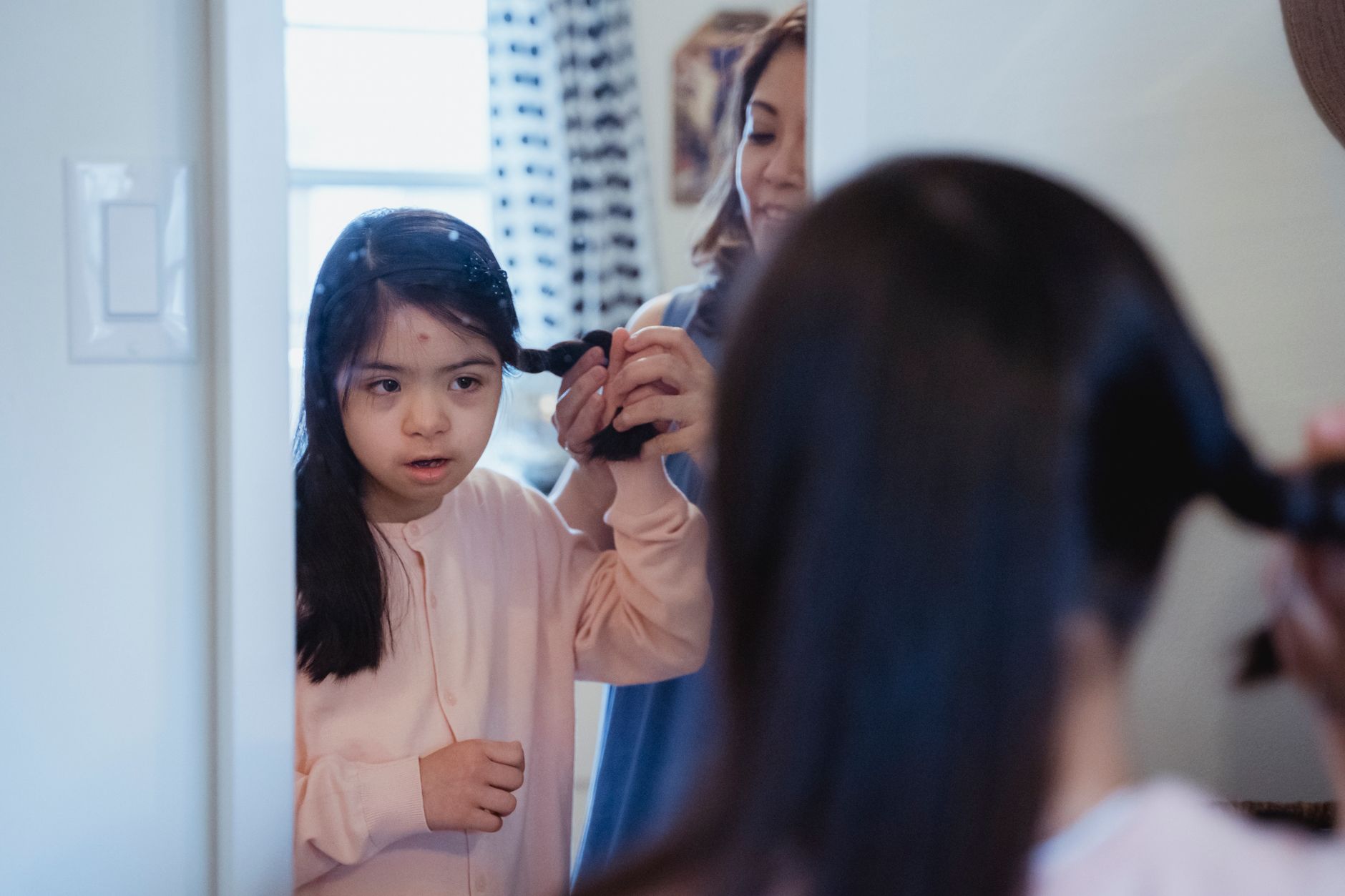
Many women can recall the moment they first heard the words “you’re the big sister, so you should understand.” For the eldest daughter, that sentence often marked the start of a role that would shape her choices, relationships, and sense of self for decades. She may have watched over younger siblings, eased tension between her parents, or quietly taken on responsibilities no one formally assigned to her. Today, the phrase eldest daughter syndrome is widely used online to describe the traits that often seem to follow firstborn daughters into adulthood. Yet behind the catchy label lies a more complicated story about birth order psychology and the family dynamics that influence how a child grows.
Where the Idea Comes From
The study of birth order is not new. Alfred Adler, an Austrian psychiatrist and an early colleague of Sigmund Freud, argued in the early twentieth century that a child’s position among siblings shaped personality. He suggested that firstborns, who once held the full attention of their parents, might grow up feeling pressure to maintain that status and to meet adult expectations early.
Later researchers expanded on these ideas. Frank Sulloway, a historian of science, popularized the theory in the 1990s, claiming that firstborns tended to be more conscientious, more achievement-oriented, and more protective of the existing order. His conclusions were influential, but they also drew sharp criticism for relying on selective samples and for overstating small effects.
More rigorous work has since tempered the claims. A large study published in Proceedings of the National Academy of Sciences in 2015, led by Julia Rohrer and colleagues, analyzed data from thousands of participants and found that birth order had almost no measurable effect on the Big Five personality traits. The researchers concluded that the popular image of the “responsible firstborn” is far less universal than many people assume.
This does not mean birth order is meaningless. Economists and sociologists have documented differences in educational attainment and family resources between firstborns and later children. The key point is that birth order interacts with gender, culture, family size, and parenting style. The experience of being an eldest daughter in one household can look very different from the experience in another.
Why Being the Eldest Daughter Can Feel Different
Gender is one of the most powerful variables in this equation. In many families, especially those with traditional expectations, the eldest daughter is treated as a second parent. She may be asked to help with cooking, cleaning, and childcare while her brothers are excused from similar duties. Sociologists sometimes describe this pattern as a form of gendered labor within the household, and it often begins long before a girl understands why she is being asked to do more.
Family therapists have a term for the extreme version of this experience: parentification. The concept was developed by Ivan Boszormenyi-Nagy and his colleagues in the 1970s to describe children who take on emotional or practical responsibilities normally carried by adults. Parentified children may become confidants for a parent facing marital conflict, financial stress, or depression. Researchers such as Robert Jurkovic have since documented how these roles can continue into adulthood, affecting self-esteem, boundaries, and the ability to ask for help.
It is important to note that not every eldest daughter is parentified. Many grow up in supportive homes and simply learn to lead, organize, and care for others. Still, the line between healthy responsibility and an overwhelming burden can be thin, and it is often invisible from the inside.
The Traits Often Associated With the Role
Popular discussions of eldest daughter syndrome tend to list a familiar set of characteristics: high achievement, a strong sense of duty, perfectionism, a habit of putting others first, and difficulty delegating or resting. Some women also report feeling responsible for keeping peace in the family and struggling with guilt when they set boundaries.
These patterns are worth taking seriously, but they should be viewed with nuance. Many of these qualities are admirable. Dependability, empathy, and leadership are valuable in the workplace and in relationships. The problem arises when these traits become rigid, when a woman feels she has no right to make mistakes, or when her worth seems tied entirely to what she provides for others.
Psychologists often describe this as the difference between responsibility and over-responsibility. A woman who organizes a family reunion because she enjoys it is exercising responsibility. A woman who feels anxious and angry whenever someone else fails to do their part, and who believes everything will collapse without her, may be carrying a load that was never fair to begin with.
How Family Dynamics Shape Adult Life
The impact of early family roles often becomes visible in adulthood. Many eldest daughters describe career choices that were shaped by a desire to be useful or to provide financial security for relatives. Some enter caregiving professions, such as nursing, teaching, or social work, and find deep meaning in them. Others become managers or entrepreneurs who are comfortable taking charge but find it hard to relax when a project is not fully under their control.
In romantic relationships, the pattern can be equally pronounced. Some eldest daughters naturally take on the planner role, managing schedules, finances, and household tasks. Partners may appreciate this at first, but resentment can build if the arrangement feels one-sided. Others struggle to express their needs, having learned early that their own feelings were secondary to keeping the family stable.
Friendships and workplace relationships can also reflect these habits. An eldest daughter may be the friend who always remembers birthdays and checks in on everyone, yet she may find it difficult to admit when she is struggling. At work, she might volunteer for extra tasks, reluctant to let a colleague fail or to appear unable to cope.
Healing and Rebalancing the Role
The good news is that roles learned in childhood are not permanent. Therapists who work with adult children of demanding or emotionally unavailable parents often focus on helping clients recognize automatic patterns and make more deliberate choices. This process may include learning to tolerate discomfort when disappointing someone, practicing clear communication about needs, and separating personal identity from family usefulness.
Self-compassion plays a central role. Many eldest daughters have spent years holding themselves to impossible standards. Recognizing that it is acceptable to rest, ask for help, or simply be imperfect can be a significant step. Some women find it useful to revisit their family history with curiosity rather than blame, asking which responsibilities they accepted willingly and which were imposed on them.
Open conversations with parents and siblings can also help. Acknowledging that a childhood role was heavy, without necessarily assigning blame, can open the door to more balanced relationships. Some families are surprised to learn how much the eldest daughter was carrying and are willing to share responsibilities differently.
For women who notice persistent anxiety, exhaustion, or a sense of emptiness despite outward success, professional support can make a meaningful difference. A licensed counselor or psychologist can help identify whether family-based patterns are contributing to these feelings and offer practical tools for change.
Beyond the Label
“Eldest daughter syndrome” is not a clinical diagnosis, and it should not be used to explain every struggle a firstborn woman faces. Personality, culture, economic circumstances, and individual experiences all matter. Yet the phrase has resonated widely because it names something real: the quiet weight of expectation that many women carry from an early age.
Understanding the psychological impact of this role allows women to see their habits with greater clarity. It also offers a reminder that family dynamics are not destiny. An eldest daughter can keep the strengths she developed, such as resilience, empathy, and leadership, while letting go of the expectation that she must always be the one holding everything together.
For many women, the most important step is simply noticing the role they have been playing and asking whether it still serves them. The answer may lead to smaller shifts, like saying no to one more favor, or to deeper changes in how they relate to their families and themselves. Either way, the journey toward balance begins with recognizing that being the eldest daughter has shaped who you are, but it does not have to define who you become.