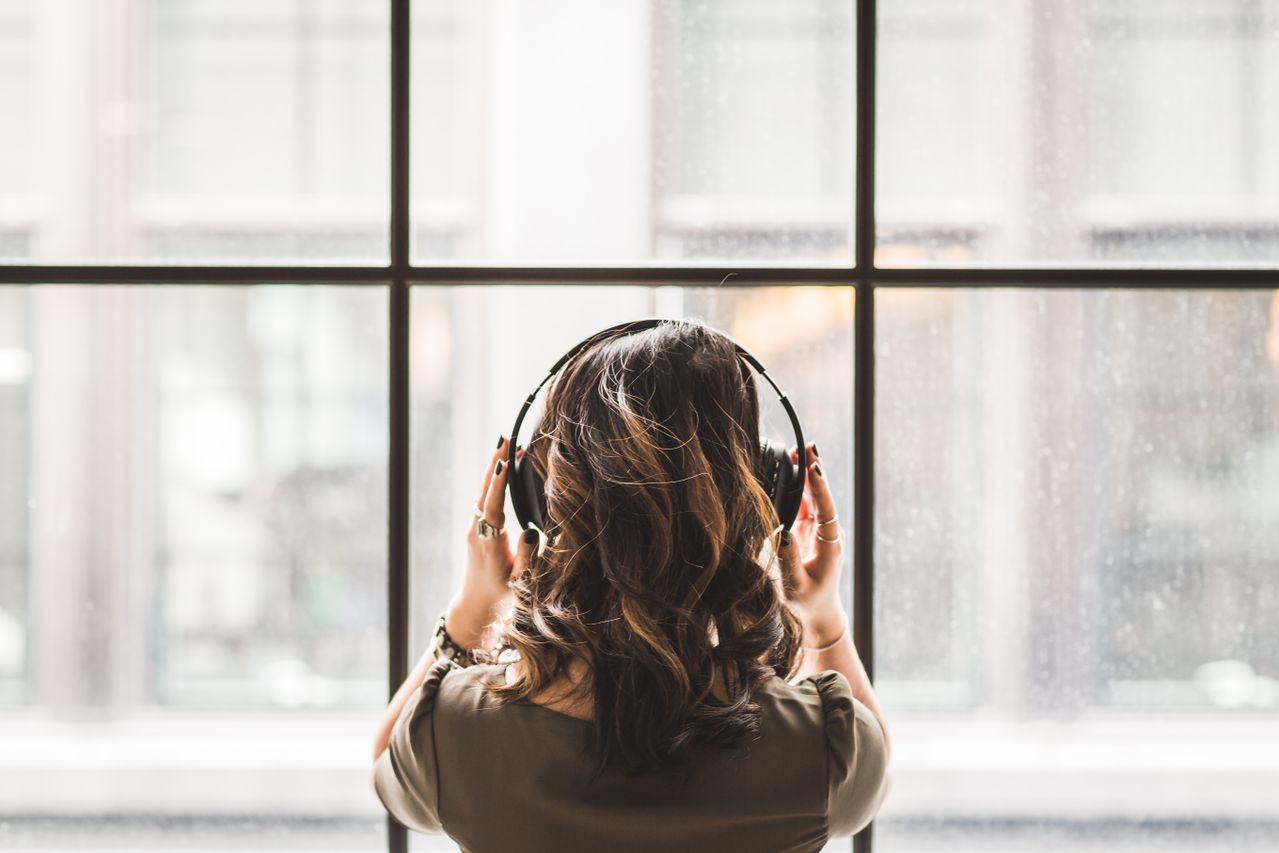
Most of us like to think we control how others see us. We choose our words carefully, dress for the occasion, and rehearse what we want to say. Yet much of what people learn about us happens below the level of conscious choice. The way we sit in a meeting, the playlist we leave on during a long drive, or the way we respond to a small inconvenience can say more about our inner world than any carefully crafted introduction.
Psychologists have studied these quiet signals for decades. Their findings suggest that personality leaks out in ordinary habits, and that the people around us pick up on those habits more often than we realize. Understanding these signals can also help us become more self-aware, which is one of the most valuable skills for personal and professional growth.
Your Space Tells a Story
Long before anyone speaks to you, your surroundings may already have introduced you. In a 2002 study published in the Journal of Personality and Social Psychology, psychologist Samuel Gosling and his colleagues asked observers to look at photographs of people’s bedrooms, offices, and living rooms and rate the occupants’ personalities. The observers’ judgments were surprisingly accurate, particularly on traits such as openness to experience and conscientiousness.
The reason is simple. A cluttered desk, a wall of books, or a carefully arranged shelf reflects choices that are shaped by values and habits. Someone who keeps a tidy workspace may be more conscientious, while a room filled with unfinished projects and mismatched décor may suggest a more spontaneous or creative temperament. These are not fixed verdicts, of course. A messy desk does not automatically mean disorganization. But the environments we build are rarely random.
The Music in Your Headphones
Music may be one of the most personal choices people make, and it can offer surprising clues about personality. Research by Peter Rentfrow and Samuel Gosling, published in 2003, found that people’s music preferences cluster into broad dimensions that map onto personality traits. Listeners who favor complex, intense, or unconventional genres tended to score higher on openness to experience, while those who prefer conventional and upbeat music often scored higher on extraversion and agreeableness.
Music also serves as a mood regulator, which makes it revealing in a different way. Some people reach for familiar songs during stress, seeking comfort and predictability. Others seek out energetic tracks to push through a difficult day. Paying attention to these patterns can offer insight into how you manage your emotions.
Words That Betray Your Mindset
Language is perhaps the most underestimated personality signal. James Pennebaker, a psychologist at the University of Texas at Austin, has spent years studying how people use words, particularly small words that most of us never think about. These include pronouns, prepositions, articles, and conjunctions, often called function words.
Pennebaker’s research has linked patterns in function word use to psychological states and traits. For example, frequent use of first-person singular pronouns such as “I” and “me” has been associated in some studies with self-focus or emotional distress, while greater use of “we” has sometimes been linked to a sense of social connection. Because people rarely monitor these words, they tend to reveal how a person is thinking rather than what they are trying to say.
Your everyday vocabulary matters too. People who frequently talk about possibilities, curiosity, or “what if” scenarios often lean toward openness, while those who emphasize routines, reliability, and practical details may show higher levels of conscientiousness. The point is not to label anyone, but to notice how language reflects attention and priorities.
Body Language Beyond the Basics
Body language has become a popular topic, and not all of the popular advice holds up. You may have heard that 93 percent of communication is nonverbal, a figure often attributed to Albert Mehrabian. In reality, his findings applied to a narrow experimental situation involving single words and tone of voice, and they were never meant as a general rule for all conversations. Research on nonverbal communication is more nuanced than that.
Still, certain behaviors do carry meaning. Posture, for instance, can signal confidence or withdrawal. People who sit with open arms and an upright torso often appear more approachable, while those who fold their arms and lean away may be signaling discomfort or guardedness, though context always matters. Eye contact is another example. Moderate, steady eye contact is generally associated with attentiveness and trust in Western settings, but cultural norms vary widely, and what feels respectful in one country may feel intense in another.
It is also worth being cautious about claims that body language can reliably expose lies. Paul Ekman’s work on facial expressions and emotions has been influential, but subsequent research has shown that people are not very accurate at detecting deception from nonverbal cues alone. What body language can reveal more dependably is emotional state: nervousness, interest, impatience, or fatigue.
How You Handle Small Frustrations
Some of the most telling moments are the least dramatic. A delayed train, a wrong coffee order, or a colleague who forgets to send a file can expose how a person handles stress. Do you sigh and move on, or do you let the moment linger? Do you apologize quickly when you make a mistake, or do you explain why it wasn’t really your fault?
These reactions connect closely to emotional regulation and agreeableness. Many people behave well when the stakes are high, but everyday irritations show what becomes automatic. Over time, those automatic responses shape how others experience working or living with you, and they often matter more to relationships than grand gestures.
The Digital Footprint You Leave Behind
Your online behavior is another mirror of your personality. A 2010 study led by Mitja Back and colleagues, published in Psychological Science, found that observers could accurately judge people’s personalities by looking at their Facebook profiles. Observers often relied on cues such as the kinds of photos people chose, the way they described their interests, and how much they shared about their social lives.
Even small habits matter. Some people post frequently and enthusiastically, others prefer to observe quietly, and many shift their style depending on the platform. The key is that your digital presence is rarely neutral. It reflects choices about what you value, how you want to be seen, and how comfortable you feel with visibility.
Why Self-Awareness Matters
Recognizing these subtle signals is valuable only if it leads to reflection. Organizational psychologist Tasha Eurich has written extensively about self-awareness and has argued that while most people believe they understand themselves well, far fewer actually do. In her work, published in Harvard Business Review and later in her book Insight, she describes a gap between how we see ourselves and how others see us. Her research suggests that people who seek honest feedback and examine their habits tend to make better decisions and build stronger relationships.
Self-awareness does not mean obsessing over every gesture or sentence. It means noticing patterns. If people repeatedly describe you as calm under pressure, you might have a strength worth building on. If colleagues often seem unsure of your reactions, you may need to communicate more clearly. Small adjustments, made consistently, can change how your personality is understood.
Reading Yourself Without Judging Yourself
The goal of understanding these behaviors is not to create a list of flaws or a set of perfect habits. Personality is complex, and most traits have both strengths and costs. A person who is highly cautious may also be thoughtful and careful. A person who speaks quickly and often may also be enthusiastic and energizing. Context determines whether a trait helps or hinders.
A useful approach is to ask a few honest questions. What does my workspace say about my priorities? How do I usually respond when plans change unexpectedly? Which words do I use most when I describe my week? Do the people closest to me see the same version of me that I see in the mirror?
Answering these questions with curiosity rather than self-criticism can be surprisingly freeing. It turns ordinary moments into information about who you are and who you want to become.
Your true personality rarely announces itself in a single dramatic moment. It emerges through patterns: the room you decorate, the songs you return to, the words you choose, the way you carry yourself, and the way you respond when life becomes inconvenient. Psychology does not offer a perfect decoder ring, and anyone who claims to read people completely from a few signals deserves skepticism. But research consistently shows that these small behaviors carry meaningful information.
The most useful takeaway may be this: the same signals that reveal your personality to others can also reveal it to you, if you choose to look. Paying attention to these subtle behaviors is a practical step toward greater self-awareness, better relationships, and a clearer sense of how you want to show up in the world.