

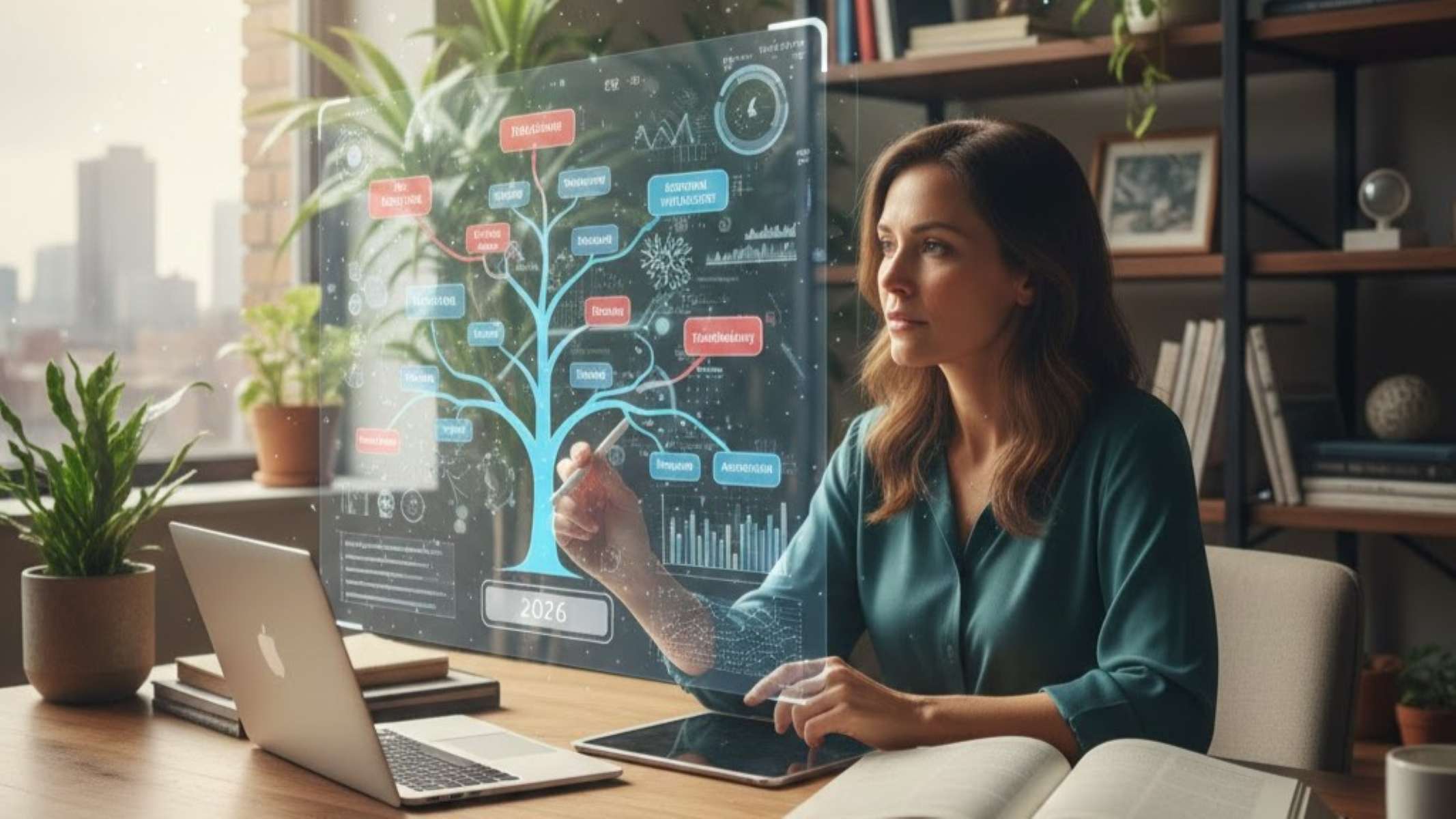
Middleportal.com – The landscape of the modern workforce is shifting beneath our feet faster than many anticipated. As we move deeper into 2026, the phrase career future-proofing has transitioned from a buzzword to a survival necessity. We are witnessing a pivotal moment in economic history where the integration of artificial intelligence and robotics is no longer a distant prospect but a daily reality. This evolution brings a mixture of anxiety and opportunity, requiring us to look honestly at which roles are changing and how we can adapt our professional identities to remain indispensable.
Understanding the Concept of Career Future-Proofing
Before we explore the specific shifts in the labor market, it is helpful to define what we mean by career future-proofing. Essentially, it is the proactive process of evolving one’s skill set and professional mindset to remain relevant despite technological advancements or economic shifts. It isn’t about competing with machines; rather, it is about identifying the unique human value that technology cannot replicate. By understanding the trajectory of automation, we can pivot our focus toward high-level strategy, empathy, and complex problem-solving.
1. Data Entry Clerks Facing Extinction
For decades, data entry was a foundational administrative role. However, sophisticated optical character recognition and automated data pipelines have made manual entry nearly obsolete. Systems now ingest, categorize, and verify information with a level of speed and accuracy that no human can match. This shift marks the end of “typing” as a primary job function, pushing professionals toward data analysis instead.
2. Customer Service Transitions to AI
We have reached a point where AI-driven conversational agents can handle the vast majority of routine inquiries. These systems don’t just follow scripts; they understand intent and sentiment. While high-level escalation still requires a human touch, the traditional front-line customer service role is rapidly being absorbed by 24/7 digital assistants that never tire.
3. Manufacturing Roles Shifting to Robotics
The factory floor has seen the most visible transformation. Modern robotics have moved beyond simple repetitive tasks to complex assembly and quality control. Collaborative robots, or “cobots,” are now standard, meaning the demand for manual labor is falling in favor of technicians who can maintain and program these mechanical systems.
4. Manual Bookkeeping Becomes Fully Automated
The era of the ledger-bound bookkeeper has largely concluded. Cloud-based financial platforms now sync directly with banking institutions to categorize expenses and generate real-time reports. While the need for strategic financial oversight remains high, the mechanical task of recording transactions is now a background process managed by software.
5. Telemarketing Replaced by AI Voice
Telemarketing is undergoing a massive shift as AI voice synthesis becomes indistinguishable from human speech. Automated systems can now conduct outbound calls, handle objections, and schedule appointments with uncanny precision. This has led to a significant reduction in traditional call center environments focused on cold outreach.
6. Retail Cashiers Yielding to Self-Checkout
Walking into a modern retail store, the shift is undeniable. Self-checkout kiosks and “just walk out” sensor technology are replacing the traditional cashier. As consumers become more comfortable with autonomous transactions, the role of the retail worker is moving away from the register and toward personalized floor assistance and brand advocacy.
7. Traditional Trucking Moving Toward Autonomy
Long-haul trucking is in the midst of a technological overhaul. While fully driverless fleets are still navigating regulatory hurdles, the integration of autonomous driving systems on highways is reducing the need for constant human steering. The profession is gradually shifting toward a “fleet supervisor” model where humans manage multiple autonomous units.
8. Basic Content Writing via Generative AI
The writing profession is experiencing a significant “middle-out” disruption. Generative models can now produce standard reports, product descriptions, and basic news summaries in seconds. For writers, the challenge is to move beyond functional text and focus on deep research, unique voice, and high-level editorial strategy.
9. Legal Research Through Specialized Algorithms
Lawyers used to spend hundreds of hours on discovery and case law research. Today, specialized algorithms can scan millions of documents to find relevant precedents in moments. This doesn’t replace attorneys, but it does eliminate the need for large teams of junior associates dedicated solely to document review.
10. Entry-Level Programming and Code Generation
Even the tech world isn’t immune. AI tools can now write boilerplate code, debug simple errors, and even translate languages. This has raised the bar for entry-level developers, who must now focus more on system architecture and user experience rather than just writing basic syntax.
11. Financial Trading Dominated by Machine Learning
Wall Street has long been a playground for algorithms, but machine learning has taken this to a new level. High-frequency trading and predictive modeling now happen at speeds human traders cannot comprehend. Success in finance now relies on designing these systems rather than making individual “gut-feeling” trades.
12. Travel Agencies Replaced by Digital Concierges
The traditional travel agent has been replaced by sophisticated digital concierges that curate entire itineraries based on personal data. These platforms offer real-time booking and personalized recommendations, leaving only a small niche for high-end, luxury human travel consultants who provide hyper-specific expertise.
13. Proofreading Tasks Controlled by Language Models
Gone are the days when proofreading was a standalone profession. Advanced language models now catch not only typos but also nuances in tone and style. Professional editors are now utilizing these tools to speed up their work, focusing their human energy on the “soul” and flow of the narrative rather than the placement of commas.
14. Receptionists Evolving into Virtual Assistants
The physical front desk is becoming a rarity in many corporate settings. Virtual receptionists and automated check-in systems now manage visitors and scheduling. The human element of this role is evolving into a “vibe manager” or office coordinator role that focuses on the physical environment and complex interpersonal logistics.
15. Insurance Underwriting via Predictive Analytics
Risk assessment is now largely a data science task. Predictive analytics can process thousands of variables to determine insurance premiums with incredible accuracy. The manual review of applications is being phased out in favor of automated systems that can offer instant quotes and policy approvals.
Cultivate Uniquely Human Emotional Intelligence
As machines take over the logical and repetitive, our greatest asset becomes our humanity. Emotional intelligence—the ability to navigate complex social dynamics, show genuine empathy, and build trust—is something AI cannot authentically replicate. In any field, the person who can manage people and relationships will always be in demand.
Master Advanced AI Workflow Integration
Rather than fearing AI, the most successful professionals will be those who learn to “co-pilot” with it. This means understanding how to use these tools to augment your own output. Mastering AI workflow integration allows you to produce high-quality work at a scale that was previously impossible, making you a “force multiplier” in your organization.
Prioritize Continuous Skill Auditing Processes
The skills that made you successful three years ago might be redundant today. It is vital to conduct regular “skill audits” on yourself. Ask: What parts of my job are being automated? What new tools are my peers using? Staying ahead requires a commitment to being a perpetual student of your own industry.
Focus on High-Value Strategic Problem-Solving
Machines are great at finding answers, but humans are still better at asking the right questions. By focusing on high-level strategy—looking at the big picture and solving complex, multi-layered problems—you move into a space where automation struggles to compete.
Build Demonstrable Specialized Digital Portfolios
In the 2026 job market, showing is more important than telling. Maintaining a digital portfolio that demonstrates your unique projects, thought leadership, and specialized expertise provides concrete proof of your value. This serves as a “moat” that protects your career from being commoditized.
Leverage Networking for Human-Centric Opportunities
Many of the best opportunities never make it to a job board; they happen through human connection. Strengthening your professional network ensures you are aware of shifts in your industry and gives you access to roles that require a high degree of trust and interpersonal nuance.
Transition Toward Creative Leadership Roles
Leadership is not just about management; it’s about vision and inspiration. Moving toward roles that require creative direction and the ability to lead a team through uncertainty is a powerful way to secure your professional future. Robots can manage processes, but they cannot yet lead people.
Embrace Lifelong Technical Literacy Training
You don’t need to be a computer scientist, but you do need to be technically literate. Understanding the “how” behind the tools you use allows you to troubleshoot, innovate, and stay relevant as the technological foundation of your industry continues to shift.
Pivot Toward Essential Human-Touch Services
There is an inherent value in the “human touch” that is actually increasing as the world becomes more digital. Roles in healthcare, high-end hospitality, and personal coaching are seeing a resurgence because people crave genuine human interaction and care.
Adopt a Resilient Growth-Oriented Mindset
Finally, the most important tool for career future-proofing is your mindset. Viewing change as an opportunity for growth rather than a threat allows you to remain agile. Resilience is the ability to reinvent yourself when necessary, ensuring that no matter how the world changes, you have the inner resources to thrive.
As we navigate these changes, it is important to remember that technology is a tool designed to serve us, not replace our purpose. While many roles are being redefined, the core of what makes work meaningful—creativity, connection, and contribution—remains firmly in human hands. By staying curious and proactive, we can turn this era of disruption into a period of unprecedented personal and professional growth.