

The concept of home security has evolved far beyond the traditional image of a heavy iron safe bolted to a basement floor. While professional security systems and high-tech cameras provide a necessary layer of protection, there is an often-overlooked strategy that is just as effective: the art of camouflage. By keeping your most precious items in places where a burglar would never think to look, you gain an extra level of peace of mind. True security often lies in plain sight, blending seamlessly into the rhythm of your daily life.
When we talk about home security for valuables, we are referring to the strategic methods used to protect high-value items—such as jewelry, cash, important documents, or family heirlooms—from theft or unauthorized access. While external security focuses on keeping intruders out, internal security focuses on minimizing loss if a breach occurs. The goal is to outsmart the “quick grab” mentality of most intruders. Most burglars spend less than ten minutes inside a home, usually targeting obvious spots like master bedroom closets and top desk drawers. By utilizing unconventional hiding spots, you significantly decrease the odds of your belongings being discovered.
1. Hidden Compartments Inside Hollow Doors
Most modern interior doors are not solid wood but are actually hollow-core constructions. This design provides a surprising amount of internal real estate that is perfect for storing slim valuables. By carefully removing a small section of the top edge of the door—a surface that is never seen by anyone standing in the room—Anda can create a narrow “sleeve” to drop in small items like rolled-up cash or gold coins.
This method is particularly effective because even if a burglar searches a room thoroughly, they are highly unlikely to inspect the top edge of a door. It is a space that exists in a blind spot. To make this work, you can use a small metal canister or a specialized “door safe” kit that fits flush with the wood. It’s a clever way to use the very architecture of your home to your advantage.
2. False Bottom Kitchen Pantry Containers
The kitchen is rarely the first place a thief looks for high-value items. It is usually cluttered with mundane items like spices, grains, and canned goods. You can capitalize on this by using “diversion safes” or creating your own false-bottom containers within your pantry. An old oatmeal circular box or a large, heavy flour canister can easily be modified to have a secret compartment at the base.
When choosing a container, pick something that looks completely ordinary and fits the aesthetic of your kitchen. If your pantry is filled with high-end organic brands, a cheap generic cereal box might look out of place. The key is to ensure that the weight feels natural; if someone were to move the container to look for something else, it shouldn’t feel suspiciously light or oddly balanced.
3. Recessed Spaces Behind Wall Clocks
Wall clocks are ubiquitous household items that we look at every day but rarely truly “see.” Because they are functional pieces of decor, they are perfect candidates for concealing small items. Many decorative wall clocks have a significant amount of depth between the clock face and the wall, providing just enough room to tuck away an envelope of important documents or a spare set of keys.
For a more integrated approach, you can install a recessed wall niche directly behind where the clock hangs. This allows you to store slightly larger items within the wall itself, using the clock as a stylish, functional “door.” It is a low-tech solution that relies on the psychological principle that we don’t look behind things that appear to be permanently fixed.
4. Concealed Voids Under Heavy Appliances
Burglars are generally looking for items they can grab and carry away quickly. They are very unlikely to attempt to lift or move heavy kitchen appliances like a dishwasher or a refrigerator. Many of these large appliances have a “kick plate” or a decorative base panel that can be easily removed to reveal a small void of unused floor space.
Storing items here is excellent for long-term security. While it may not be the most convenient spot for items you need to access daily, it is an ideal location for a waterproof, fire-resistant pouch containing your family’s birth certificates or emergency silver bars. Just ensure that any items stored here are well-protected from dust and the heat generated by the appliance’s motor.
5. Empty Vacuum Cleaner Dust Bags
This is perhaps one of the most creative ways to implement home security for valuables because it uses an object associated with dirt and chores. An old-fashioned bagged vacuum cleaner sitting in a utility closet is one of the least attractive items in a home to a thief. By placing jewelry or small electronics inside a clean, empty dust bag and then installing that bag into the vacuum, you create a hiding spot that is virtually invisible.
The brilliance of this method is that even if a thief is looking for a safe, they will never think to open a cleaning tool. To ensure you don’t accidentally throw your valuables away, you might want to place a small piece of masking tape on the underside of the vacuum as a quiet reminder to yourself that this particular unit is “loaded” with more than just dust.
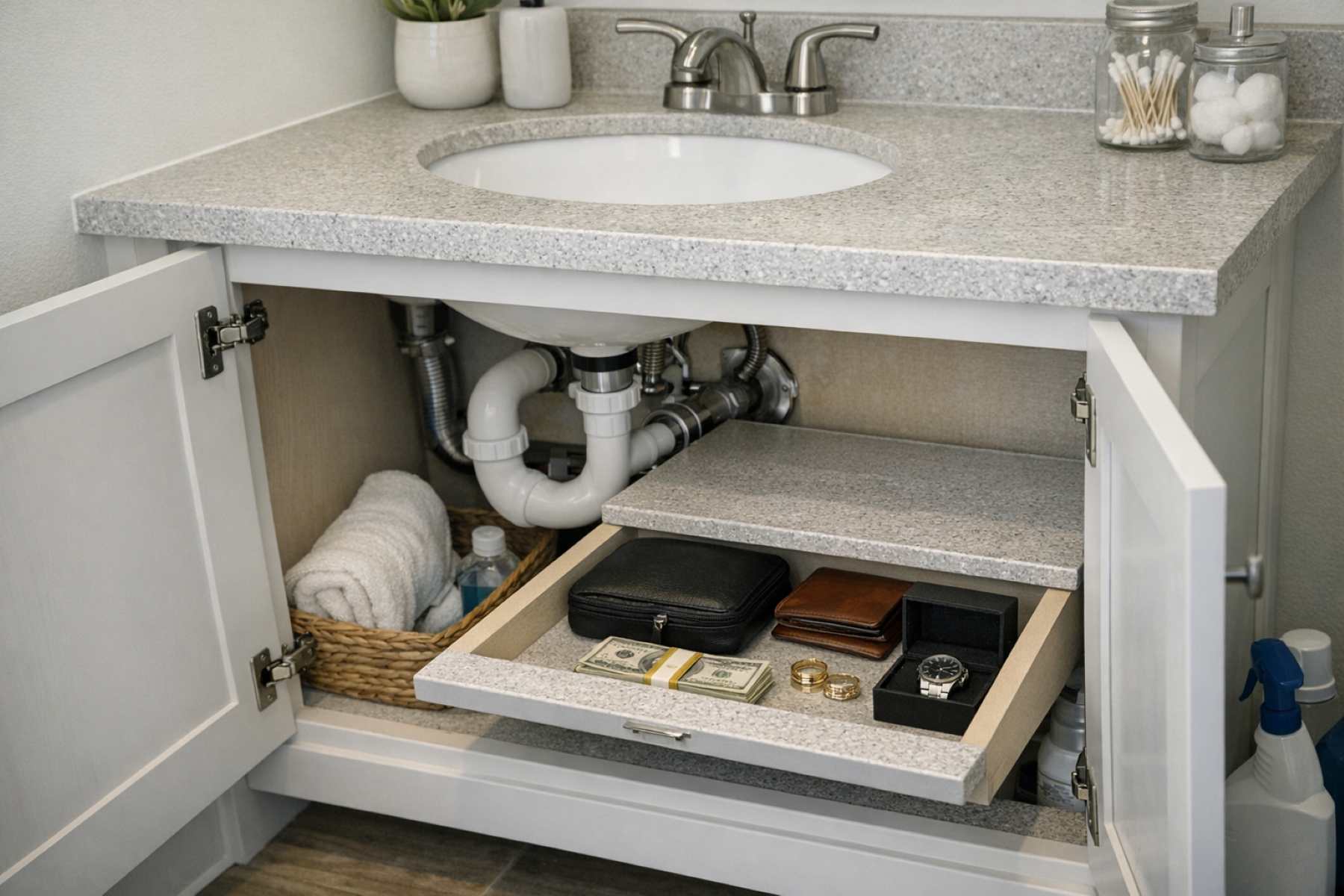
6. Interior Cavities of Bathroom Vanities
Bathrooms are often overlooked in security planning, but they offer several clever hiding spots. Most bathroom vanities have a “dead space” behind the drawers or at the very base of the cabinet. By removing the bottom drawer entirely, you can often find a wide, flat area on the floor that is hidden by the vanity’s frame.
This area is perfect for storing flat items or small lockboxes. Since most people only open bathroom drawers to grab a toothbrush or some soap, they never see the structure underneath. Like the kitchen pantry method, this relies on the fact that bathrooms are viewed as utilitarian spaces rather than places where wealth is stored.
7. Disguised Storage Within Air Vents
Air vents and return grilles are found in almost every room and are naturally integrated into the walls or ceilings. While you shouldn’t block the actual airflow of your HVAC system, you can purchase “dummy” vents that look identical to your functional ones but lead to a small built-in wall safe instead of ductwork.
Even using a real vent can work if you use a magnetic pouch to secure items to the inside of the metal ducting, just out of sight from the slats. This is a classic tactic for a reason: it works. It’s a high-security feel without the need for a high-security price tag, keeping your belongings tucked away in the very veins of your home.
Securing your home doesn’t always require the most expensive technology or a fortress-like safe. Often, the most effective home security for valuables comes down to creativity and understanding the psychology of an intruder. By diversifying your hiding spots and utilizing the unexpected areas we’ve discussed, you create a home environment that is much harder to exploit. Remember, the best place to hide something is in a spot so mundane that it never invites a second glance.