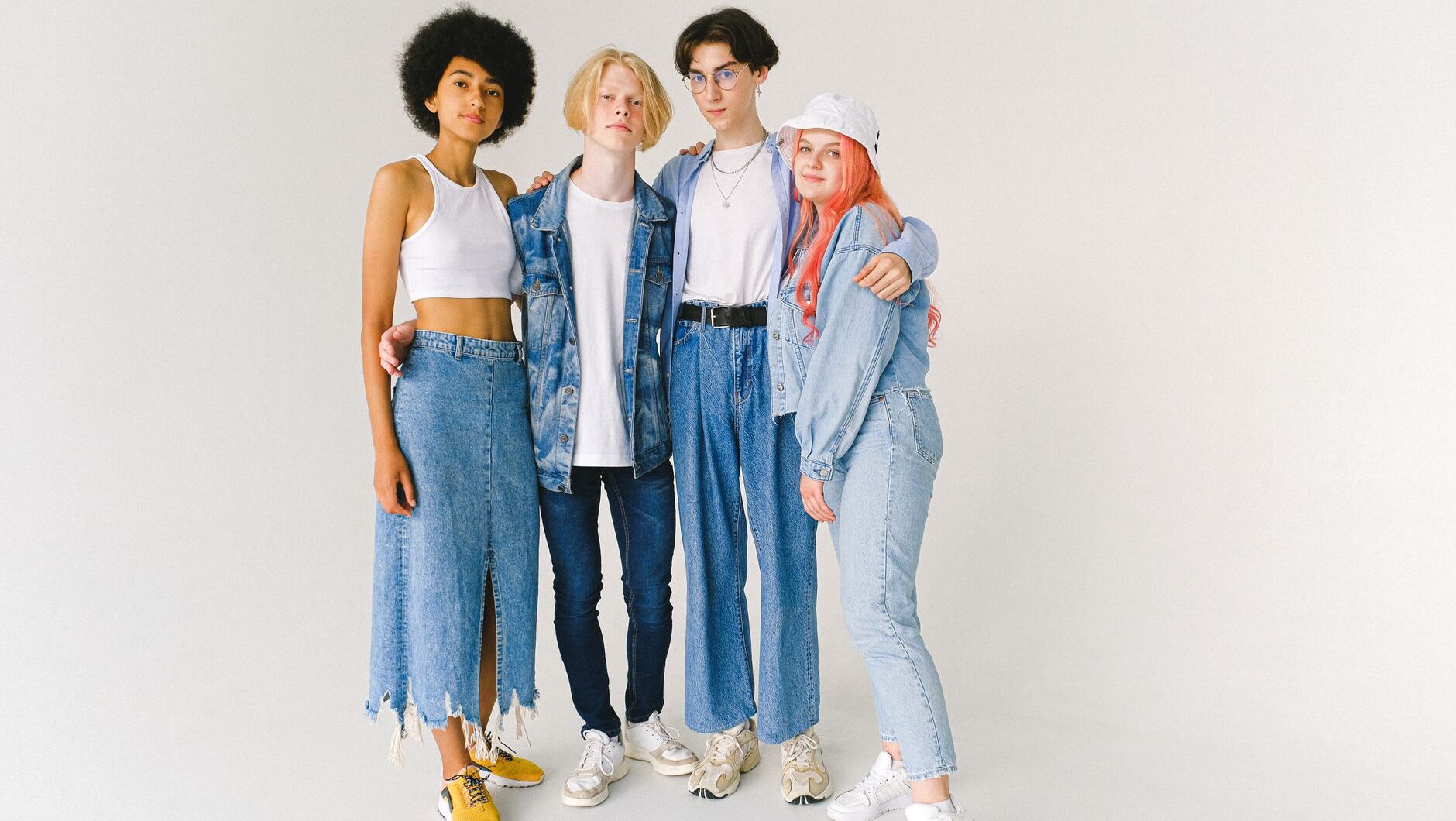
Hoodies, chunky sneakers, bright colors, and oversized jackets have become the everyday uniform of Gen Z. For many young adults in their twenties, though, those same clothes can quietly shape how others judge them. A 25-year-old analyst might be overlooked for a client presentation. A new graduate might be asked whether they are “still a student.” A young professional might hear that they “look too young to lead a team.” Often, the common thread is not their skills or their work, but what they wear.
This is where gen z fashion collides with questions of adult maturity, and where style psychology offers a useful lens. Clothing is one of the fastest signals people send and receive, and in a world where first impressions are formed in seconds, appearance can either reinforce or undercut the credibility a young adult has worked hard to earn.
Who Counts as Gen Z, and Why the Label Matters
The Pew Research Center generally defines Gen Z as people born from 1997 through 2012. That means the oldest members are now well into their late twenties and entering midcareer roles, while the youngest are still teenagers or just starting college. The generation is large, digitally fluent, and visible across workplaces, universities, and online platforms.
The problem is that the generational label carries baggage. Older colleagues, managers, and even customers often carry mental images of “young people” shaped by school hallways and youth culture. When a 26-year-old walks into a meeting wearing graphic tees and sneakers, some observers may instantly file them under the younger category, regardless of their qualifications. Fashion becomes the shortcut that triggers that assumption.
The Psychology Behind First Impressions
Psychologists have long studied how quickly people form judgments based on appearance. Research on “thin slicing,” associated with psychologist Nalini Ambady, suggests that observers can form surprisingly consistent impressions from very brief exposure to a person. Those impressions often include traits like competence, trustworthiness, and warmth, even before any real conversation takes place.
Clothing contributes heavily to this process. The halo effect, first described by psychologist Edward Thorndike in 1920, explains how one visible quality can color perceptions of unrelated qualities. A polished appearance can make someone seem more capable, while a casual or youthful look may lead people to assume less experience, even when that assumption is unfair.
There is also evidence that clothing shapes the wearer’s own mindset. In a 2012 study published in the Journal of Experimental Social Psychology, researchers Hajo Adam and Adam Galinsky introduced the concept of “enclothed cognition,” showing that the symbolic meaning of clothing can influence how people think and perform. Participants wearing a lab coat labeled as a doctor’s coat showed greater attention than those who wore the same coat described as a painter’s garment. The takeaway is that style does not only change how others see us. It can also change how we see ourselves and how we carry ourselves in a room.
Why Youth Style Gets Read as “Immature”
Much of the perception gap comes down to context. Streetwear, athleisure, and playful color palettes are not inherently unprofessional. They are embraced by designers, creative agencies, and tech companies around the world. Yet they are read differently depending on the setting.
In a creative studio or a startup where casual dress is normal, a hoodie may signal belonging and modern taste. In a law firm, a bank, a government office, or a formal client meeting, the same piece can send a different message. Observers may interpret it as a lack of awareness of professional norms, or as a sign that the wearer is still figuring out their place.
This is why many young adults report feeling caught between two worlds. Their personal style reflects their identity, friendships, and online communities, yet their professional environment often expects signals of seniority. The tension is real, and it can feel frustrating when the substance of their work is ignored because of how they look.
It is also worth noting that trends associated with youth have a habit of cycling back. Y2K fashion, cargo pants, and chunky sneakers have all been revived by older consumers and designers. Still, a trend being fashionable does not automatically make it appropriate for every workplace, and that distinction is part of what makes style such a sensitive topic for young professionals.
The Cost of Being Underestimated
Being perceived as younger than one’s age is not just an emotional annoyance. It can have practical consequences. Studies on workplace bias, including research on age stereotypes, have shown that older employees often face discrimination, but younger workers can encounter a mirror-image problem, where their competence is questioned because of their age or apparent inexperience. When a young adult is repeatedly treated as a junior, they may receive fewer opportunities for leadership, be interrupted more often in meetings, or be given tasks that do not match their expertise.
Over time, this can affect confidence. If colleagues consistently talk down to someone, that person may begin to second-guess their own voice. The result is a cycle in which appearance triggers doubt, doubt affects performance, and performance then appears to confirm the original assumption.
For Gen Z, this dynamic is particularly important because many members of the generation entered the workforce during periods of economic uncertainty and remote work. Some had fewer in-person opportunities to build professional relationships and learn unwritten workplace codes. Learning how to present oneself can therefore be a practical skill, not a superficial one.
Rethinking Style as a Tool, Not a Judgment
The goal is not to suggest that young adults should abandon their personal style or conform to outdated dress codes. Personal expression matters, and it is part of a healthy identity. Instead, the more useful approach is to view style as a tool that can be adjusted depending on the audience and the goal.
Many professionals already do this without thinking about it. They wear one outfit for a client pitch and another for a casual team lunch. The key is intentionality. A few well-fitted pieces, clean shoes, neat grooming, and clothing that matches the setting can communicate reliability without erasing individuality. An unexpected detail, such as a distinctive watch, a bold jacket, or a signature accessory, can still express personality while keeping the overall look polished.
Quality often matters more than trend. Well-made basics that fit properly can project seniority more effectively than expensive but ill-fitting items. Fit, in particular, is one of the most underrated elements of perceived maturity. Clothes that are too large or too tight can make anyone look less put together, regardless of their age.
Building Credibility Beyond the Wardrobe
Style is only one part of how people judge maturity. Communication, reliability, and self-assurance carry equal weight. A young professional who speaks clearly, follows through on commitments, asks thoughtful questions, and handles disagreements calmly will often be taken seriously, even if their wardrobe is casual.
It also helps to be direct when assumptions surface. A simple, confident response to being talked down to, such as clearly restating a proposal or stating a relevant credential, can shift how others perceive the interaction. Older colleagues and managers are not always aware of their own biases, and many respond well to clear, professional communication.
Mentorship and visibility matter as well. Young adults who seek out senior advisors, contribute to projects that showcase their expertise, and build a track record of results give others concrete evidence of their capabilities. Over time, that evidence tends to outweigh first impressions.
The Bigger Picture: Style, Identity, and Respect
Ultimately, the question of why Gen Z adults get treated like kids touches on something larger than clothing. It is about how society decides who deserves to be taken seriously, and how quickly it relies on surface cues. Fashion is simply the most visible of those cues.
Gen Z has already shown that it can reshape industries, from media and retail to entertainment and technology. Its members are not asking for special treatment. They want their work, ideas, and capabilities to be judged on their merits. At the same time, they are learning that navigating professional spaces often requires awareness of how appearance is read.
The most mature approach may be a balance. Young adults can express their identity through style while also understanding the settings they enter. Older colleagues, in turn, can make an effort to look beyond their assumptions about age and clothing. When both sides do that, the conversation shifts from what someone is wearing to what they are capable of doing.
Being treated like a kid at 25 or 28 is frustrating, but it is also a solvable problem. Understanding the psychology of first impressions, recognizing how context shapes the meaning of clothing, and combining personal style with professional credibility can help young adults command the respect they have earned. Style will always be a form of self-expression, and it should remain so. When it is paired with strong communication and proven results, it becomes a powerful signal of adult maturity rather than a reason to be dismissed.