Navigating the waters of service industry compensation can often feel like solving a complex mathematical equation, especially when traveling or adjusting to new social environments. Understanding tipping rules US CA is essential not just for polite behavior, but for ensuring that service workers receive fair compensation. Across North America, the culture of gratuity is deeply embedded in the economy. Unlike many European or Asian countries where service charges are either included in the bill or tipping is viewed as an oddity, the United States and Canada operate on a service model where tips make up a substantial portion of a worker’s take-home pay.
Mastering gratuity etiquette requires more than just leaving a few extra bills on the table; it demands an understanding of context, geographic location, and the type of service received. Whether you are grabbing a quick morning coffee or settling a hefty bill at a fine-dining establishment, knowing the unspoken social contract of tipping can save you from awkward encounters and ensure you show proper appreciation for good service.
The Evolution of the Gratuity Culture in North America
To understand why tipping holds such a prominent place in North American society, it helps to look at the economic structure of the hospitality and service sectors. In both the United States and Canada, federal and provincial labor laws often permit a “tipped minimum wage.” This means employers are legally allowed to pay service workers—such as waiters, bartenders, and bussers—a base hourly wage that is significantly lower than the standard minimum wage, under the legal assumption that tips will bridge the gap to a livable income.
While there have been ongoing legislative pushes in various states and provinces to eliminate the sub-minimum wage for tipped workers, the cultural expectation of tipping remains firmly intact. Consequently, a tip is rarely viewed merely as an optional bonus for exceptional performance; rather, it is widely considered a deferred payment for labor. When customers fail to tip standard amounts without a valid reason, the direct impact is felt by the service worker, who still has to “tip out” support staff based on a percentage of their total sales.
The Ultimate Restaurant Tipping Guide
Dining out is the most common scenario where tipping is expected, yet it is also where diners make the most mistakes. Following a reliable restaurant tipping guide can streamline your dining experiences and ensure you are compensating your servers appropriately.
When sitting down at a full-service restaurant, the baseline expectation for standard service generally hovers between 18% and 20% of the pre-tax bill. If the service is truly exceptional—meaning your water glass is never empty, your requests are handled promptly, and your server maintains a warm, professional demeanor—tipping 22% to 25% is standard practice among polite diners. Conversely, if the service is noticeably poor, dropping to 15% is acceptable, though leaving nothing at all should be reserved for egregious, rude behavior, and ideally accompanied by a conversation with the manager.
A common point of confusion is whether to calculate the tip before or after taxes. Etiquette experts consistently recommend calculating your tip based on the subtotal before taxes are applied. However, many modern point-of-sale (POS) systems automatically calculate percentages based on the post-tax total. While tipping on the post-tax amount is a generous bonus, calculating on the pre-tax amount remains the traditional standard.
For larger groups, the rules change slightly. Most restaurants automatically add an 18% to 20% gratuity charge for parties of six or more. Always check your receipt carefully before adding an additional tip to avoid accidentally doubling up.
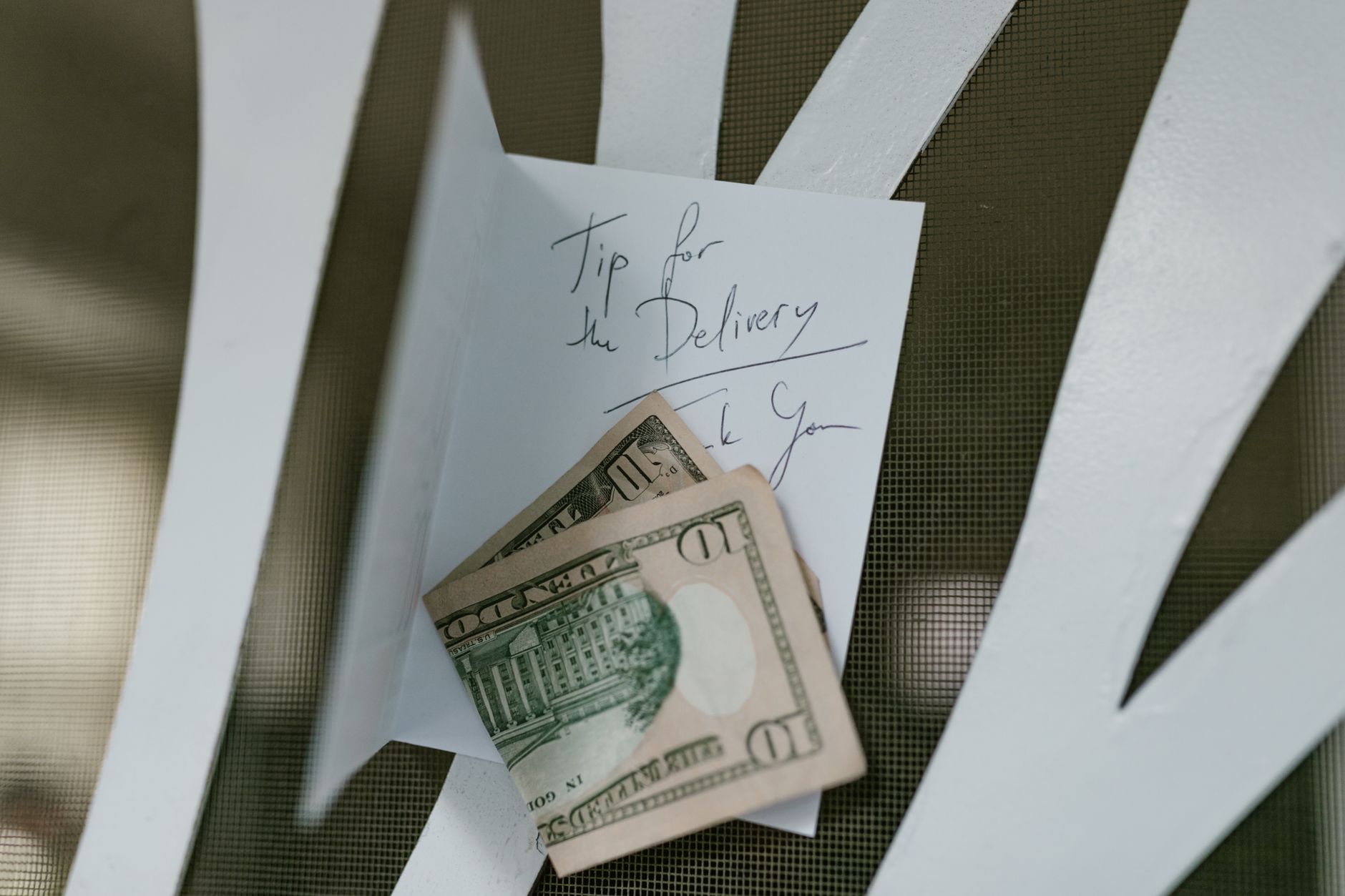
When it comes to takeout and delivery, standards have shifted notably since the pandemic. For food delivery drivers navigating traffic and inclement weather to bring meals to your doorstep, a tip of 15% to 20%, or a minimum of $3 to $5 depending on the distance, is customary. For counter-service pickup, where staff simply hand you a bag across a counter, tipping is entirely optional and usually ranges from $1 to $2, or simply rounding up the bill, rather than matching the percentage expected from a sit-down waiter.
Beyond the Dining Room: Service Etiquette in Daily Life
While restaurants dominate the conversation, social etiquette dictates that tipping extends far beyond the culinary world. Navigating the myriad of tip prompts on modern payment screens requires a balanced understanding of who relies on gratuities and who does not.
In the personal care and beauty industry—including hair stylists, barbers, nail technicians, and massage therapists—tipping is firmly expected. Standard practice is to leave 15% to 20% of the total service cost. For salon owners who operate their own businesses, tipping is sometimes considered optional, though many clients still choose to tip 10% to 15% as a gesture of appreciation for outstanding work.
The hospitality industry also relies heavily on tipping for behind-the-scenes staff. When staying at a hotel, housekeeping staff work diligently to clean rooms between guests. Leaving a tip of $2 to $5 per night, ideally left daily rather than at the end of a multi-night stay (since different housekeepers may clean your room each day), is a thoughtful practice. Similarly, valets who retrieve your vehicle efficiently, bellhops who assist with heavy luggage ($1 to $2 per bag), and concierges who secure hard-to-get reservations ($5 to $20 depending on the complexity of the task) all anticipate gratuities.
Transportation is another sector with distinct rules. For traditional taxi drivers and rideshare operators (such as Uber and Lyft), tipping 15% to 20% of the fare is standard, especially if the driver assists with luggage or navigates a particularly difficult route.
Navigating the Digital “Tip Creep”
In recent years, the proliferation of tablet-based payment systems at bakeries, coffee shops, and fast-casual eateries has introduced a phenomenon known as “tip creep.” Consumers are frequently confronted with digital screens prompting them to tip 18%, 20%, or 25% for a simple counter transaction where no table service was provided.
Understanding modern social etiquette means recognizing that you should never feel pressured or guilty about pressing “No Tip” or “Custom” for counter-service transactions. While tipping a dollar or two for a complicated specialty coffee drink or to support a local neighborhood bakery is a kind gesture, it is by no means mandatory. These workers typically earn standard minimum wages or higher, unlike traditional restaurant servers. Evaluate each situation independently: if the interaction is transactional and brief, opting out of a tip is entirely acceptable.
Cultural Nuances: United States vs. Canada
While the US and Canada share many similarities in their tipping cultures, subtle differences exist. In Canada, federal and provincial labor laws have increasingly moved toward eliminating the sub-minimum wage for servers in certain provinces, such as Ontario and British Columbia, where tipped workers must now be paid the standard general minimum wage. Despite these legislative changes, consumer expectations remain largely aligned with the United States, and standard tipping rates in Canadian restaurants remain firmly at 15% to 20%.
Furthermore, currency conversion can sometimes cause friction for international travelers visiting North America. When paying with cash or credit, keeping local expectations in mind ensures smooth transactions and prevents service staff from bearing the financial brunt of cultural misunderstandings.
Finding the Right Balance
Ultimately, tipping is a reflection of appreciation for good service and a recognition of labor economics in regions where service workers depend on gratuities to make a living wage. By keeping standard percentages in mind—such as 18% to 20% for sit-down dining and personal care, moderate amounts for delivery and hospitality staff, and using discretion for counter service—you can navigate any service scenario with confidence.
Respecting these guidelines not only ensures that you adhere to proper social norms, but it also acknowledges the hard work of the millions of service professionals who keep the hospitality and tourism industries running smoothly every day.