

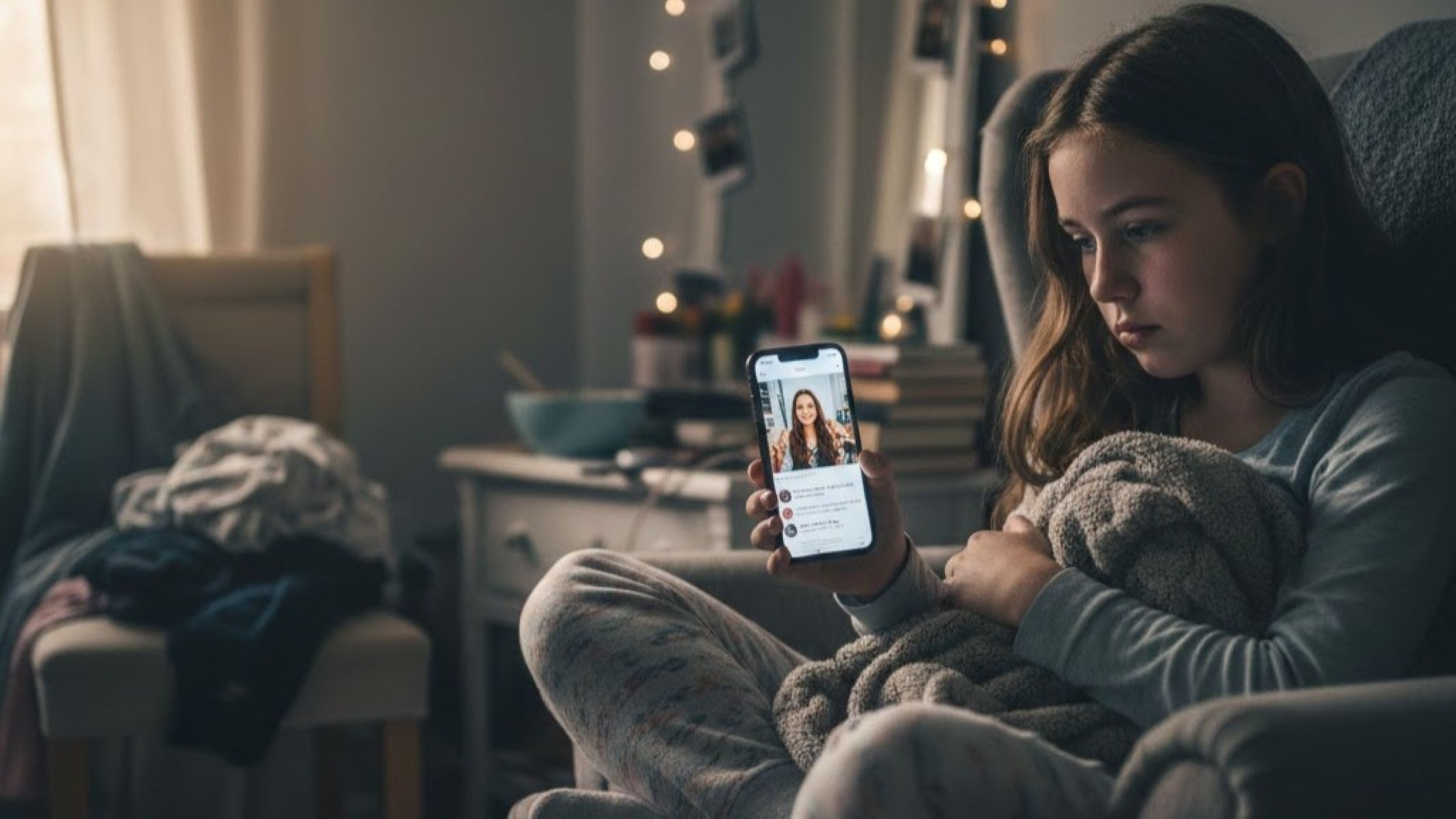
Middleportal.com – In an era where we are more “connected” than ever before, a quiet paradox is unfolding within the bedrooms of teenage girls across the globe. While smartphones offer an endless stream of communication, recent data suggests that the feeling of isolation among adolescent girls has reached a historic peak. We often assume that a notification or a like serves as a digital hug, but for a developing mind, these interactions frequently lack the chemical and emotional resonance of true human presence. This social media boom, while technologically impressive, has inadvertently created a landscape where one can have a thousand followers and still feel entirely alone.
Understanding Teen Girls, Social Media, and Loneliness
To understand this phenomenon, we must first look at how we define teen girls social media loneliness. This isn’t just the occasional feeling of being left out of a weekend plan; it is a chronic sense of emotional disconnection fueled by digital environments. For teenage girls, social media is not just a tool but a primary social ecosystem. When this ecosystem prioritizes performance over authenticity, it creates a “loneliness gap”—a space where digital noise drowns out meaningful support, leaving many young women feeling unseen despite their constant online activity.
The Weight of Unrealistic Beauty Standards
One of the most profound drivers of this internal isolation is the relentless pressure of beauty standards. In the past, these images were confined to glossy magazines or billboards, but today, they live in a girl’s pocket, refreshing every few seconds. When a young girl is constantly exposed to filtered, airbrushed, and AI-enhanced versions of her peers and celebrities, the mirror becomes a source of disappointment. This struggle often becomes a private burden, as girls may feel they are the only ones failing to meet these impossible ideals, leading to a deep sense of personal inadequacy and social withdrawal.
The Trap of Excessive Passive Scrolling
There is a significant psychological difference between using social media to create and using it to consume. Many teenage girls find themselves trapped in “passive scrolling,” where they silently observe the highlight reels of others without actually engaging. This behavior often leads to a phenomenon known as “social snacking”—getting just enough digital interaction to stay hooked, but not enough to feel nourished. Over time, this habit replaces active, real-world hobbies and face-to-face interactions, leaving a void that a scrolling thumb simply cannot fill.
The Lasting Emotional Harm of Cyberbullying
The digital landscape has unfortunately extended the reach of the schoolyard bully into the sanctuary of the home. Cyberbullying is uniquely isolating because it often happens in a semi-public forum where the victim feels watched but not protected. Because these interactions are recorded and shareable, the emotional harm feels permanent. For many girls, the fear of digital retaliation or public shaming leads them to “self-silence,” withdrawing from online and offline communities to avoid conflict, which only intensifies their sense of being alone in their struggle.
The Toll of Constant Negative Social Comparisons
Humans are naturally wired to compare themselves to others, but social media has turned this instinct into a high-speed race with no finish line. Teenage girls are particularly susceptible to “upward social comparison,” where they measure their own mundane daily lives against the curated, “perfect” moments of others. When a girl sees a group of friends at a party she wasn’t invited to, or a peer achieving a milestone she hasn’t reached, the digital evidence makes the exclusion feel more tangible and painful, fostering a belief that everyone else is living a more vibrant, connected life.
The Fragility of Superficial Online Connections
While a “like” or a “streak” might provide a temporary hit of dopamine, these interactions are often incredibly thin. Digital friendships frequently lack the vulnerability and physical presence required for deep emotional bonding. For many teenage girls, their online networks are “wide but shallow.” When they face real-life challenges—like a breakup or academic stress—they may find that their hundreds of digital “friends” aren’t equipped to provide the substantive empathy they need. This realization that their support system is more aesthetic than functional is a major catalyst for loneliness.
How Algorithmic Content Limits Perspectives
The math behind our feeds also plays a surprising role in isolation. Algorithms are designed to keep us engaged by showing us content that mirrors our current moods or biases. If a teenage girl is already feeling down or insecure, the algorithm may inadvertently feed her more “sad-posting” content or communities that romanticize isolation. Instead of being challenged or uplifted, she is kept in a digital echo chamber that reinforces her loneliness, making it harder for her to see a path toward connection or a change in perspective.
Navigating Higher Smartphone Dependency Rates
Finally, the sheer amount of time spent on devices is a factor that cannot be ignored. Data consistently shows that teenage girls tend to spend more time on social-heavy apps compared to their male counterparts. This high dependency often leads to a displacement of sleep and physical activity, both of which are essential for emotional regulation. When a smartphone becomes the primary lens through which a girl views the world, she may lose the “social muscle” required for spontaneous, in-person conversation, making the real world feel more daunting and the digital world feel like a lonely necessity.
Addressing teen girls social media loneliness requires a shift from blaming technology to fostering digital intentionality. It is about encouraging young women to use these platforms as tools for genuine expression rather than mirrors for validation. While the data highlights a sobering trend, it also opens the door for more meaningful conversations between parents, educators, and teens. By prioritizing “offline” presence and recognizing that the digital world is often a distorted version of reality, we can help the next generation of women find the deep, authentic connections they truly deserve.