

In the rapidly evolving landscape of 2026, a peculiar and heartwarming phenomenon has emerged. We often hear about the vast divide between the “digital native” Zoomers and their “analog-loving” Baby Boomer grandparents. However, if you look closer at the quiet corners of modern life, you’ll notice that these two demographic bookends are beginning to look remarkably alike.
Driven by a search for grounding in an increasingly chaotic world, young adults are intentionally reaching back into the past. This isn’t just about a love for retro aesthetics; it’s a strategic shift toward intergenerational lifestyle trends that prioritize mental clarity, financial security, and authentic human connection. It turns out that the lifestyle Boomers built out of necessity or tradition is exactly what Gen Z is choosing for their own well-being.
What Are Intergenerational Lifestyle Trends?
Before we dive into the specific habits, it’s helpful to understand what we mean by intergenerational lifestyle trends. Essentially, these are behavioral patterns or cultural values that bypass the “middle” generations to find a common resonance between the youngest and oldest members of society. In 2026, this convergence is fueled by a collective fatigue toward the digital “hustle culture.” While Boomers value these habits because they represent the stability of their youth, Gen Z is adopting them as a form of “radical slowness”—a deliberate choice to reject the ephemeral and embrace the enduring.
1. Prioritizing Physical Analog Media Collections
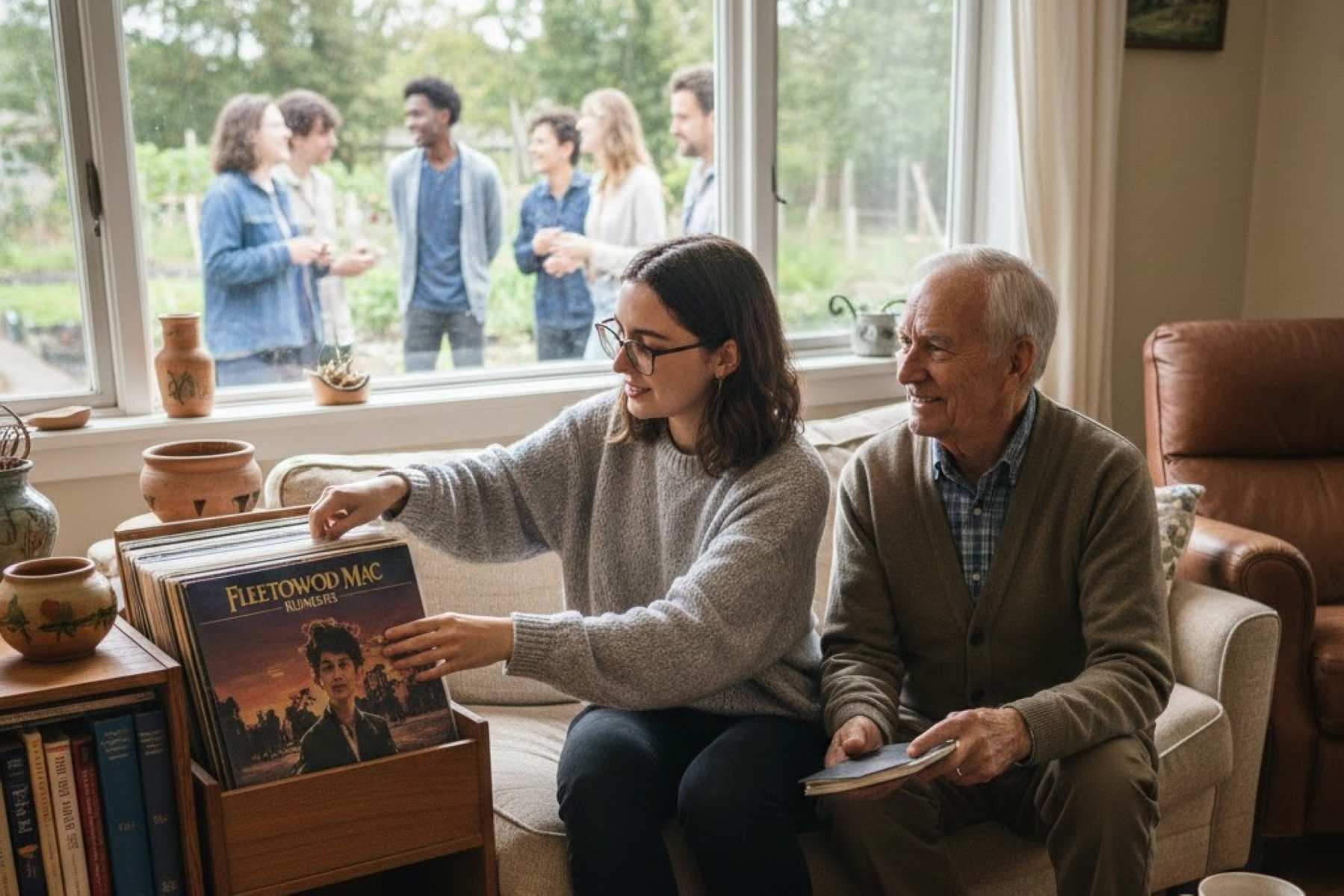
For years, we were told that the future was purely digital, stored in an invisible cloud. Yet, walk into any Gen Z apartment today, and you are likely to see a proud display of vinyl records, film cameras, and overflowing bookshelves. Much like the Boomer generation, who spent decades curated their home libraries and record crates, young people are rediscovering the joy of “owning” rather than “subscribing.”
The appeal lies in the tactile experience. There is a specific kind of mindfulness required to carefully place a needle on a record or to wait for a roll of 35mm film to be developed. In a world of infinite, disposable streaming, physical media offers a sense of permanence and an intentional way to interact with art. It’s no longer just about the music or the image; it’s about having a physical artifact that proves a moment in time actually existed.
2. Returning to Traditional Grocery Shopping
The convenience of 10-minute delivery apps and ghost kitchens seems to be losing its luster for the younger crowd. Instead, we are seeing a massive resurgence in traditional grocery shopping and meticulous meal planning—a hallmark of the Boomer household. This shift is partly economic, as people seek more control over their budgets, but it is also deeply therapeutic.
Walking through the aisles, touching the produce, and interacting with the local butcher provides a sensory connection to our food that an app cannot replicate. Gen Z is finding that there is a quiet dignity in the “weekly shop.” By planning meals and cooking from scratch, they are not only saving money but also reclaiming their time from the frantic pace of the digital world. It’s a return to the kitchen as the heart of the home, a space for creativity and nourishment rather than just a place to unpack a takeout container.
3. Embracing Early Morning Daily Routines
The “night owl” trope that once defined youth culture is being replaced by the “5 a.m. Club.” Young professionals are increasingly adopting the early-rising habits typically associated with their grandparents. This isn’t about working more; it’s about finding a window of peace before the digital world wakes up and begins its relentless pinging.
Scientific studies in 2026 have highlighted the profound mental health benefits of aligning with a natural circadian rhythm. By waking up early to garden, read, or simply enjoy a quiet cup of coffee, Gen Z is mirroring the disciplined morning structures that Boomers have used for decades to maintain order. This “slow morning” movement acts as an emotional buffer, allowing individuals to start their day with a sense of agency and calm rather than a stressful rush.
4. Investing in High-Quality Craftsmanship
We are witnessing the slow death of “fast fashion” and disposable furniture. In its place, Gen Z is adopting the Boomer philosophy of “buy it once, buy it right.” There is a growing reverence for heritage brands, solid wood furniture, and hand-stitched garments. Young people are realizing that a $15 shirt that falls apart in three washes is more expensive—and more soul-crushing—than a high-quality piece that lasts a decade.
This trend toward craftsmanship is also an environmental statement. By choosing items that are built to last, the younger generation is aligning with the conservationist habits of their elders. They are frequenting tailors, learning to repair their own goods, and scouring vintage shops for items with a history. This intergenerational respect for quality is creating a new kind of “modern heirloom” culture where the value of an object is measured by its longevity rather than its trendiness.
5. Seeking Offline Social Community Engagement
Perhaps the most significant shift is the migration away from digital-only social circles toward physical “third places.” Much like the bridge clubs, bowling leagues, and neighborhood associations of the mid-20th century, Gen Z is actively seeking out offline communities. We are seeing a boom in run clubs, pottery classes, and local book circles.
There is a visceral need for face-to-face interaction that social media simply cannot satisfy. By engaging in these local communities, young people are finding the same sense of belonging and “social safety net” that Boomers have long cherished. These physical gatherings provide a space for serendipitous conversations and real-time empathy, proving that while technology can connect us, only physical presence can truly ground us.
6. Practicing Conservative Financial Saving Methods
In an era of volatile crypto-markets and “doom spending,” a surprising number of young adults are returning to the financial basics. The “Boomer method” of high-yield savings accounts, emergency funds, and consistent, long-term contributions to retirement plans is becoming the gold standard for Gen Z.
There is a renewed focus on financial literacy that feels distinctly traditional. Instead of chasing get-rich-quick schemes, the focus has shifted toward building a “fortress of stability.” Young people are increasingly wary of debt and are prioritizing “sinking funds” for major life milestones. This conservative approach to money is a direct response to global uncertainty, proving that the old-school wisdom of “saving for a rainy day” never truly goes out of style.
The convergence of these habits suggests that, regardless of when we were born, our fundamental human needs remain the same. We all crave a sense of control, a touch of beauty, and a place to belong. As Gen Z continues to weave these “old-fashioned” values into their modern lives, they aren’t just imitating the past—they are refining it.
These intergenerational lifestyle trends offer a beautiful reminder that wisdom is a two-way street. While the younger generation learns the value of stability and quality from their elders, they bring their own energy of inclusivity and environmental consciousness to these traditions. In the end, we may find that we aren’t so different after all, as we all strive to build a life that feels authentic, sustainable, and deeply rooted.