

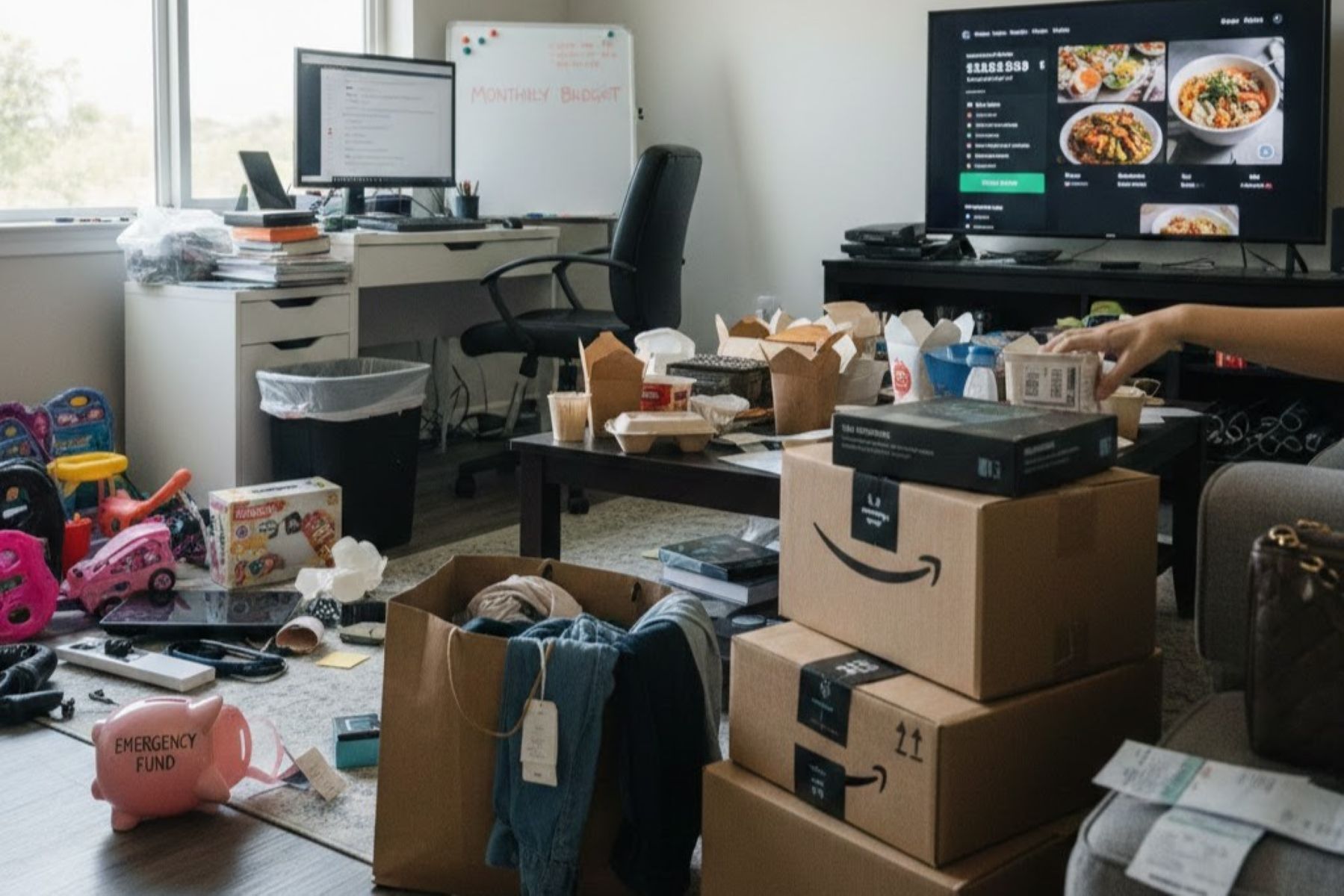
Managing a household budget often feels like trying to fill a bucket that has several tiny, invisible holes. You put plenty of resources in, but by the end of the month, the water level is inexplicably low. While we often look for one “big” financial mistake to blame, the reality is that family savings are usually eroded by subtle, repetitive behaviors. These habits are so deeply woven into our daily routines that we stop seeing them as expenses and start seeing them as necessities.
Identifying these “wealth leaks” isn’t about embracing a life of deprivation. Rather, it is about regaining control so that your hard-earned money goes toward the things that truly matter—like a family vacation, a child’s education, or a comfortable retirement. By recognizing wasteful family habits, you can shift from a mindset of passive spending to one of intentional living.
Understanding Wasteful Family Habits
Before we dive into the specific behaviors, it is helpful to define what we mean by wasteful family habits. In a modern context, these are recurring patterns of expenditure that provide little to no long-term value or genuine happiness. They are often “autopilot” decisions—things we do because they are convenient, trendy, or simply because we’ve always done them. These habits are sneaky because they rarely involve large sums of money at once; instead, they act as a “death by a thousand cuts” for your bank account.
1. The Trap of Frequent Impulse Buying
It starts innocently enough: a quick trip to the store for milk and bread ends with a cart full of seasonal decor, a new kitchen gadget, and three shirts that were “on sale.” Impulse buying non-essentials is perhaps the most common way families lose track of their financial goals. Retailers spend billions of dollars on psychological triggers designed to make us feel a sense of urgency or a “need” for items we hadn’t considered five minutes prior.
To combat this, many families find success by implementing a 48-hour rule. If you see something you want that isn’t on your list, wait two days before purchasing it. Usually, the initial rush of excitement fades, and you’ll realize the item wasn’t actually necessary. Shifting your focus toward planned purchases ensures that your home stays clutter-free and your savings stay intact.
2. Relying on Daily Restaurant Meals
In the hustle of modern life, the convenience of “grabbing something on the way home” is incredibly tempting. However, eating out daily or relying heavily on delivery services is a significant drain on family resources. Beyond the cost of the food itself, you are paying for labor, overhead, packaging, and delivery fees—all of which can mark up the price of a meal by 300% or more compared to a home-cooked alternative.
Transitioning toward home cooking doesn’t have to be an all-or-nothing endeavor. Start by picking two nights a week to meal prep or try “double-batching” dinners, where you cook enough for two nights at once. Not only does this save a substantial amount of money over the course of a year, but it also allows your family to have more control over the nutritional value of your meals, fostering healthier long-term habits.
3. The High Cost of Credit Card Overspending
Credit cards are powerful tools for building credit and earning rewards, but they can easily become a gateway to spending money you haven’t actually earned yet. When we swipe a card, the “pain” of payment is delayed, making it psychologically easier to justify larger purchases. If the full balance isn’t paid off every month, high-interest rates begin to compound, meaning you are essentially paying a “tax” on every item you bought weeks or months ago.
Breaking the cycle of overspending requires a shift in how we view plastic. Treat your credit card like a debit card; if the money isn’t currently in your checking account, the purchase shouldn’t happen. By staying within your means and avoiding interest charges, you ensure that your money stays in your pocket rather than going toward a bank’s profit margins.
4. Navigating Life Without Budget Tracking
Many families view “budgeting” as a restrictive or even scary word, but in reality, a budget is simply a roadmap for your money. Ignoring monthly budget tracking is like trying to drive to a new destination without a GPS; you might get there eventually, but you’ll likely waste a lot of fuel and take several wrong turns along the way. Without tracking, it is nearly impossible to see where your money is actually going.
Modern technology has made this easier than ever, with various apps that sync directly to your accounts. However, even a simple spreadsheet or a notebook can work. The goal is to review your spending at the end of each week. When you see exactly how much is being spent on miscellaneous categories, it becomes much easier to make conscious adjustments and redirect those funds toward your family’s actual priorities.
5. Neglecting the Emergency Fund
Life is unpredictable, and when a car breaks down or a home repair becomes urgent, the lack of an emergency fund often forces families to turn to high-interest loans or credit cards. Skipping the build-up of an emergency reserve is a habit that leaves your family financially vulnerable. It creates a cycle of debt that is difficult to break because you are always playing “catch-up” with the last unexpected expense.
Building this fund doesn’t require a massive windfall. It starts with small, consistent contributions—even $20 or $50 per paycheck. Over time, this creates a financial “buffer” that provides immense peace of mind. Knowing that you have a safety net allows you to handle life’s surprises without derailing your long-term savings goals or falling back into old debt patterns.
6. Chasing Trends and Unnecessary Gadgets
We live in an era of rapid technological advancement, where a “new and improved” version of every gadget seems to come out every six months. Buying trendy electronics unnecessarily is a habit fueled by the fear of missing out (FOMO). Whether it’s the latest smartphone, a high-end espresso machine, or the newest gaming console, these purchases often provide a short-term dopamine hit but offer diminishing returns in daily utility.
Before upgrading a piece of tech that currently works perfectly fine, ask yourself if the new features will truly change your quality of life. In most cases, waiting just one more year to upgrade can save a family thousands of dollars over a decade. Value the functionality of what you own rather than the prestige of what is new.
7. The Silent Drain of Unused Subscriptions
Perhaps the sneakiest of all wasteful family habits is the accumulation of “zombie” subscriptions. From streaming services and gym memberships to monthly “box” deliveries and app premiums, these small $10 to $15 charges often go unnoticed on a bank statement. However, when you add up five or six unused services, you are looking at hundreds of dollars a year literally disappearing for nothing in return.
Conduct a “subscription audit” every few months. Look through your bank statements and identify recurring charges. If you haven’t used a service in the last 30 days, cancel it. Most services make it easy to restart your subscription if you truly miss it, but you’ll often find that you don’t miss it at all.
Recognizing these habits is the first and most important step toward financial freedom. It isn’t about being perfect or never enjoying a meal out; it’s about making sure your spending aligns with your family’s deepest values. When we choose to move away from wasteful family habits, we aren’t just saving money—we are reducing stress, clutter, and the constant pressure to keep up with an unsustainable lifestyle.