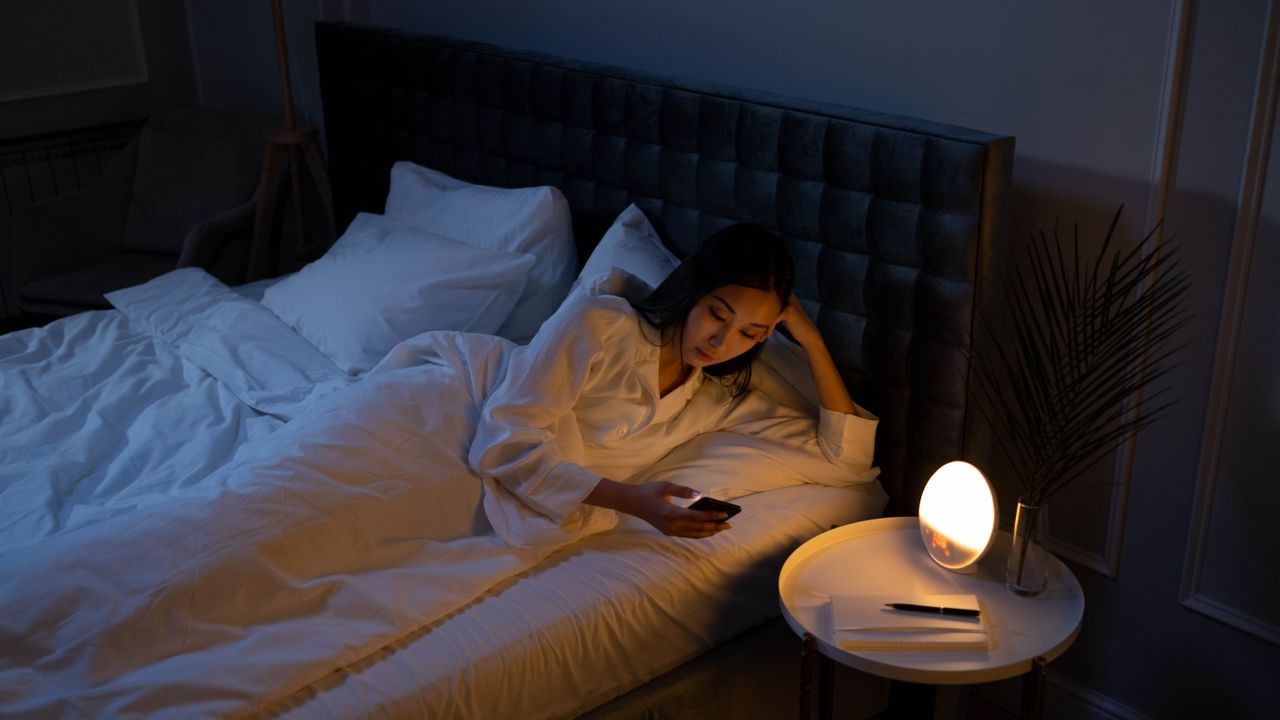
It is 2 a.m. The house is quiet, the phone is face down on the nightstand, and your mind has suddenly decided it is the perfect time to replay a conversation from three years ago, list every bill you have not paid, and imagine worst-case scenarios about your job. Sleep feels impossible, and the harder you try to fall asleep, the more alert you become.
If this sounds familiar, you are far from alone. Late-night anxiety is one of the most common forms of distress people describe, and it often feels more intense than the worries that surface during the day. Understanding why it happens is the first step toward quieting it. The good news is that there are practical, evidence-based ways to calm those night thoughts and get back to restful sleep.
Why Anxiety Feels Louder After Dark
Anxiety does not simply appear at night by chance. Several overlapping biological and psychological factors combine to make nighttime a particularly vulnerable window.
The body runs on a daily rhythm known as the circadian clock. Cortisol, the hormone associated with alertness and stress, normally falls to its lowest point around midnight and then begins to rise in the early morning. Melatonin, which signals that it is time to sleep, climbs in the evening. So in the middle of the night, your body is not in a state of heightened stress hormone output. However, stress responses are not purely hormonal. The brain’s threat-detection system, centered in the amygdala, remains active, and when it is primed by fatigue or a long day, it can interpret ordinary thoughts as urgent.
Sleep itself plays a major role. Research from the University of California, Berkeley, published in Current Biology in 2007, found that after a night of sleep deprivation, participants showed significantly stronger amygdala reactivity to negative images compared with well-rested participants. In plain terms, a tired brain reacts more strongly to emotional material. Lack of sleep does not just make you tired; it makes worries feel heavier and more threatening.
Then there is the quiet of the night itself. During the day, your attention is pulled outward by work, conversations, errands, and notifications. Once the lights go off and distractions fade, the mind has nothing competing for its focus. Thoughts that were pushed aside during the day return with full force. Psychologists call this pattern rumination, the repetitive, circular focus on problems without moving toward solutions. Rumination thrives in silence and in the absence of practical tasks to anchor attention.
Finally, the night often brings a sense of isolation and perspective distortion. At 2 a.m., problems can seem bigger, more permanent, and less solvable than they would after breakfast and a cup of coffee. Experts often note that nighttime worry is not a reliable measure of how serious a problem really is.
The Overthinking Loop That Keeps You Awake
Many people who struggle at night describe a familiar cycle. A worry arises, and rather than letting it pass, the mind starts analyzing it. That analysis produces more questions, which lead to imagined outcomes, which trigger physical tension and a racing heart. The body reacts to the imagined threat as though it were real, and that physical arousal makes sleep even harder to reach. Then the person begins worrying about not sleeping, which adds yet another layer of anxiety.
This is why trying to force yourself to stop thinking rarely works. Telling yourself “don’t think about it” often has the opposite effect, as the thought becomes more prominent. Effective strategies tend to work differently. Instead of suppressing thoughts, they change how you relate to them and reduce the physical and environmental triggers that keep the loop running.
Practical Solutions That Actually Help
The most reliable approach for chronic sleep-related anxiety is cognitive behavioral therapy for insomnia, commonly known as CBT-I. The American College of Physicians recommends it as a first-line treatment for chronic insomnia, ahead of sleep medications in most cases. CBT-I combines several techniques, including stimulus control, which means using the bed only for sleep and getting up if you cannot fall asleep after a reasonable period; sleep restriction, which temporarily limits time in bed to build sleep pressure; and cognitive restructuring, which challenges unhelpful beliefs about sleep. Many of these skills can be practiced at home, and a trained therapist can guide you through them.
Another helpful tool is the “worry window.” Researchers studying generalized anxiety have found that setting aside a specific, limited time earlier in the day to think through concerns can reduce how often worries intrude at night. The idea is simple. When a worry appears in the evening, you note it and tell yourself you will address it during your scheduled time tomorrow. Over time, the brain learns that worries have a designated place and does not need to hold onto them at bedtime.
Writing things down before bed also appears to help. A 2018 study led by researchers at Baylor University, published in the Journal of Experimental Psychology: General, found that people who wrote a brief to-do list for the next day, including tasks they had not completed, fell asleep faster than those who wrote about completed tasks. The researchers suggested that writing down unfinished concerns helps the mind feel that they are recorded and will be handled, which reduces the urge to keep rehearsing them. A simple notebook on the nightstand can serve this purpose well.
Physical relaxation is equally important. Progressive muscle relaxation, a technique in which you gently tense and then release each muscle group in turn, can lower physical arousal and shift attention away from racing thoughts. Slow, controlled breathing, especially with a longer exhale than inhale, activates the parasympathetic nervous system, which supports calm. While breathing exercises are not a cure on their own, they can make it easier to settle the body so that the mind follows.
Small Habits That Make a Big Difference
Daily habits strongly influence how easily anxiety surfaces at night. Caffeine is a common culprit. Its half-life is roughly five hours, meaning that an afternoon coffee can still have a substantial effect on the nervous system at bedtime. Alcohol may seem to help people fall asleep, but it tends to fragment sleep later in the night and suppress REM sleep, which is important for emotional processing.
Screens also deserve attention. Bright light, particularly from devices, can delay melatonin release, and scrolling through news or social media exposes the brain to a steady stream of stimulating or distressing content just when it should be winding down. Many people find that setting a “screen curfew” about an hour before bed makes a noticeable difference. Dimming the lights in the evening and creating a consistent wind-down routine, such as reading a physical book or taking a warm shower, signals to the body that the day is ending.
Regular daytime exercise, exposure to natural light in the morning, and keeping a consistent sleep and wake schedule all support a healthier circadian rhythm. Over time, a stable rhythm makes the body more resilient to stress and less likely to tip into alarm during the night.
What to Do When the Thoughts Won’t Stop
When you wake in the middle of the night and feel your mind spinning, the goal is not to win an argument with your thoughts. It is to lower the temperature. Avoid checking the clock repeatedly, since watching the time often increases pressure. Keep the room cool, dark, and quiet if possible. If you have been lying awake for more than about twenty minutes, consider getting up and moving to a dim room to do something calm and undemanding, like reading or listening to soft music. Return to bed only when you feel sleepy.
It also helps to remind yourself that a difficult night does not define your future. Many people find that simply accepting the discomfort, rather than fighting it, reduces its power. Telling yourself something like “I may not sleep well tonight, and that is okay” can remove the added anxiety of trying to force sleep.
When to Seek Professional Help
Occasional sleepless nights are a normal part of life, especially during stressful periods. However, you should consider talking with a doctor or mental health professional if nighttime anxiety persists for several weeks or more, if it regularly prevents you from functioning during the day, or if it is accompanied by panic attacks, persistent low mood, or thoughts of harming yourself. Sleep problems and anxiety disorders often feed each other, and effective treatment is available. A primary care provider can rule out medical causes such as thyroid problems or sleep apnea, and a therapist trained in CBT or anxiety treatment can provide targeted support.
If you ever feel in immediate danger or unable to keep yourself safe, contact your local emergency services or a crisis helpline right away.
Reclaiming Your Nights
Late-night anxiety feels deeply personal, but it is rooted in predictable biology and common patterns of thought. Tired brains amplify emotion, quiet rooms invite rumination, and worries grow heavier in the dark. By understanding these forces, you can respond with tools that actually work: scheduling worry time, writing down unfinished tasks, calming the body, reducing evening stimulation, and seeking structured help when needed.
Progress often comes gradually. You may not transform your sleep in a single week, but each small change teaches your mind that the night is safe, and that a racing thought at 2 a.m. does not require an immediate answer. With patience and consistent practice, the hours after dark can become a time of rest rather than dread.