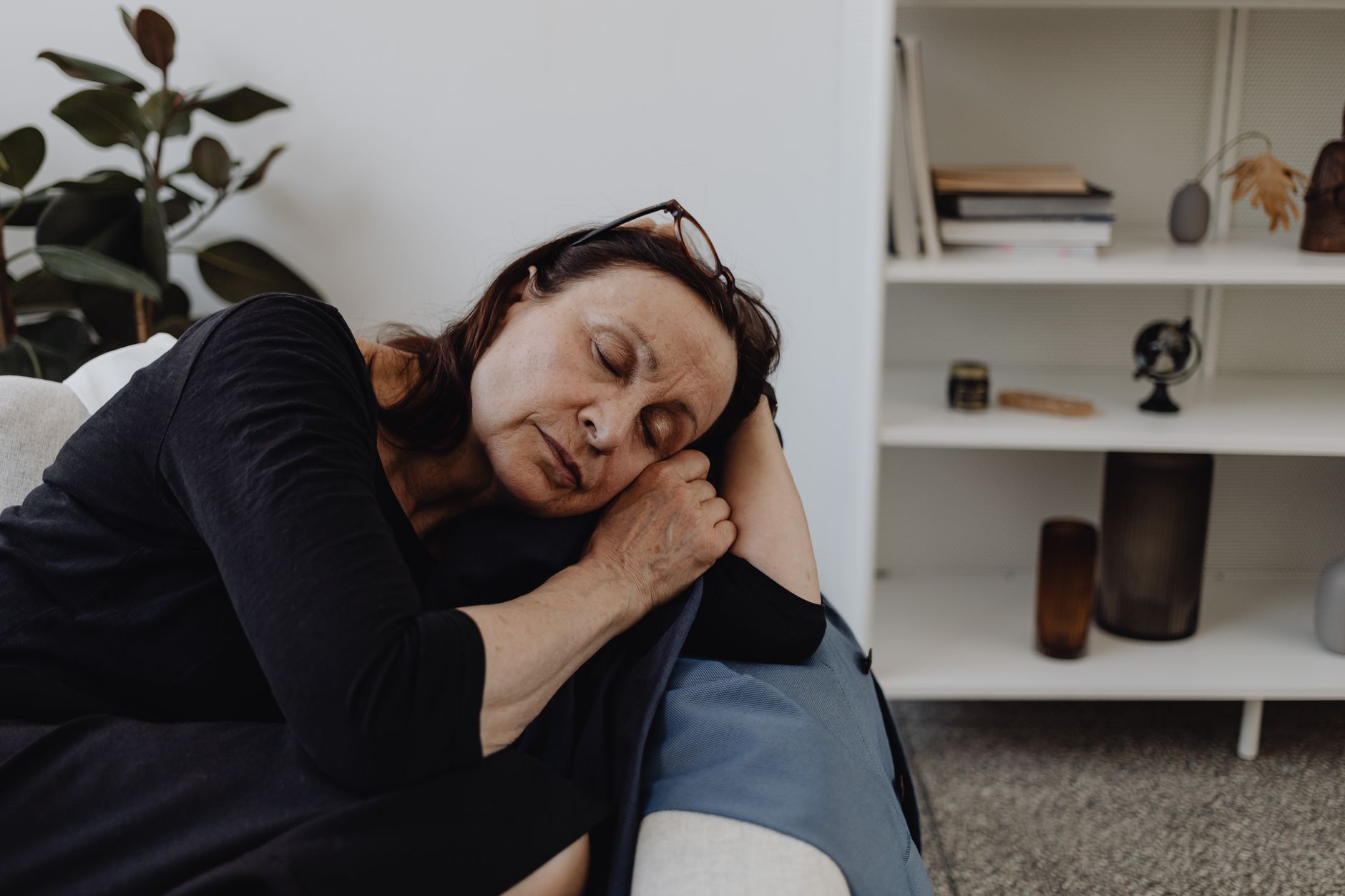
A 45-minute nap sounds like a reasonable way to recharge in the afternoon. But for many adults over 60, it can backfire spectacularly: you lie down at 1:30 p.m., wake at 2:15 p.m., and then spend the next two to three hours in a haze—groggy, slow-thinking, slightly irritable, and unable to fully shake it off until dinnertime.
If that sounds familiar, you are not imagining it. The problem is not napping itself. The problem is the timing. A 45-minute nap lands almost perfectly in the worst possible window of the sleep cycle, and the biology of aging makes the consequences more pronounced. The good news: there is a precise wake-up window that lets you get the restorative benefits of an afternoon nap without the fog. Understanding it takes only a few minutes—and it can change how your entire afternoon feels.
Why 45 Minutes Is the Worst Possible Nap Length
To understand the fog, you need to understand what your brain is doing while you sleep. Sleep is not a uniform state. It moves in cycles of roughly 90 minutes, and the first part of each cycle is dominated by light sleep—stages N1 and N2—which is relatively easy to wake from. Deeper sleep, known as slow-wave or N3 sleep, typically begins to dominate somewhere around the 20-to-30-minute mark in a healthy adult, though this varies from person to person and shifts with age.
Here is the catch. If you set an alarm for 45 minutes, you are almost guaranteeing that you wake up in the middle of deep sleep. Waking from deep sleep produces a well-documented phenomenon called sleep inertia—the groggy, disoriented, cognitively impaired state that can last anywhere from a few minutes to several hours. Sleep inertia after napping is not a sign of weakness or laziness. It is a real physiological state in which blood flow and brain activity are transitioning out of a deeply synchronized pattern, and they do not switch back instantly.
A 45-minute nap captures the worst of both worlds. It is long enough to let you descend into deep sleep, but too short to let you complete the cycle and emerge naturally into lighter sleep. You are essentially waking yourself at the bottom of a well and then asking your brain to climb out in a hurry.
Why This Hits Harder After 60
The aging body changes how sleep works in several ways that make this problem worse for seniors.
First, sleep architecture shifts. Older adults spend less time in deep sleep overall, but the deep sleep they do get can arrive earlier in a nap and feel more intense when interrupted. Second, sleep becomes lighter and more fragmented, which means the transition out of deep sleep can be rockier. Third, and perhaps most importantly, the body’s circadian rhythm shifts earlier with age—many adults over 60 naturally feel sleepy earlier in the evening and wake earlier in the morning, which changes the ideal timing of an afternoon nap.
There is also a practical dimension. After 60, many people are managing blood pressure, blood sugar, medications, or chronic conditions that can amplify feelings of grogginess. Some medications, including certain antihistamines, blood pressure drugs, and sleep aids, can deepen sedation and lengthen the recovery time from sleep inertia. If you regularly feel foggy for hours after a nap, it is worth mentioning to your doctor, because the nap may be interacting with something else in your health picture.
This is why the concept of the best nap length for seniors is not a one-size-fits-all number. It depends on your age, your health, your medications, and the time of day. But the research points to a reliable range that works for the vast majority of older adults.
The Exact Minute Mark to Wake Up
If you want the short answer: set your alarm for 20 minutes from the moment you close your eyes, and cap the entire nap at 30 minutes. For most adults over 60, the sweet spot for a restorative nap without the fog is somewhere between 10 and 20 minutes of actual sleep, with a total time in bed of no more than 30 minutes.
Here is a practical breakdown of how to time it:
- 0 to 5 minutes: Settling in. You are still awake or in very light transition. This does not count as sleep.
- 5 to 20 minutes: Light sleep, stages N1 and N2. This is where the magic happens. Light sleep restores alertness, improves mood, and sharpens focus without triggering deep sleep.
- 20 to 30 minutes: The danger zone begins. If you are still asleep here, you risk slipping into deep sleep, and waking becomes a gamble.
- 30 to 45 minutes and beyond: Deep sleep territory for most people. Waking here is what produces the hours-long fog you are trying to avoid.
So the exact minute mark to wake up is not one single number—it is a window. Aim to be awake by the 20-to-30-minute mark, measured from the moment you actually doze off. If you struggle to fall asleep quickly, give yourself a 30-minute total window and accept that a shorter nap is still a successful one. Even 10 minutes of light sleep delivers measurable benefits.
A useful trick: set two alarms. The first at 20 minutes as a gentle nudge, and the second at 30 minutes as a hard stop. If you are still awake at the 20-minute mark, get up. Do not try to “make it count” by pushing longer. A failed nap is far better than a nap that leaves you foggy for three hours.
What If You Need More Sleep? The 90-Minute Alternative
There is a second, less common option for people who genuinely need more rest: the full-cycle nap of about 90 minutes. This allows your brain to pass through light sleep, deep sleep, and back into lighter sleep and REM, so you wake at the top of a cycle rather than the bottom. The fog is much less likely—but the trade-off is that a 90-minute nap is a major time commitment, and for many older adults it can interfere with nighttime sleep.
For most people over 60, the 20-minute power nap is the better default. The 90-minute cycle nap is worth considering only if you are significantly sleep-deprived, recovering from illness, or have been cleared by a doctor to nap longer. And if you regularly need 90 minutes of daytime sleep, that is a signal to talk to a healthcare provider about nighttime sleep quality, sleep apnea, or other underlying issues.
How to Build Healthy Napping Habits Over 60
The length of the nap is only one variable. When and how you nap matters just as much. These are the habits that tend to work best for older adults:
Nap early in the afternoon. The ideal window is roughly 1:00 p.m. to 3:00 p.m., when the body’s natural circadian dip occurs. Napping after 3:00 p.m. makes it harder to fall asleep at night and can push your whole schedule later. For adults over 60, whose body clocks tend to run early, the window may lean closer to 12:30 p.m. to 2:30 p.m.
Keep it dark but not too dark. A dim, cool room helps you fall asleep quickly, but you do not need blackout conditions. Complete darkness can make it harder to wake up. A modest amount of ambient light is fine.
Avoid caffeine after noon. Caffeine has a half-life of about five hours, and it is longer in older adults. A coffee at 1:00 p.m. can still be active at 6:00 p.m. and disrupt the nighttime sleep that makes daytime naps unnecessary in the first place.
Do not nap every single day out of habit. If you are not actually sleepy, a nap can erode nighttime sleep pressure. Reserve naps for days when you genuinely feel the dip. A consistent sleep schedule at night is the foundation; naps are a supplement, not a substitute.
Get up and move after waking. The single best antidote to lingering grogginess is movement and light. Within a minute or two of waking, stand up, open the curtains, and walk around. Light exposure and physical activity accelerate the brain’s transition out of sleep inertia.
Keep a consistent wake-up time in the morning. This anchors your circadian rhythm and makes afternoon naps more predictable and less disruptive.
When a Nap Is a Warning Sign, Not a Solution
Napping is normal and healthy for many older adults. But a sudden change in napping habits deserves attention. If you have never napped and suddenly find yourself unable to stay awake in the afternoon, or if you are napping for long stretches and still feel exhausted, it may point to an underlying issue—sleep apnea, medication side effects, thyroid problems, anemia, depression, or another condition.
Pay attention to these red flags:
- Needing a nap every day and still feeling unrested
- Naps that regularly stretch beyond 45 minutes because you cannot wake up
- Falling asleep unintentionally while reading, watching television, or driving
- Waking up with headaches, dry mouth, or a sore throat, which can suggest sleep apnea
- New or worsening daytime fatigue that has developed over weeks or months
None of these automatically mean something is wrong, but they are worth raising with a doctor. The goal is not to eliminate napping—it is to make sure your naps are helping rather than masking a problem.
A 45-minute nap is not inherently bad. It is simply poorly timed for most people, and especially for adults over 60. It lands you in deep sleep and then yanks you out of it, producing the sleep inertia that leaves you foggy for hours. The fix is simple: shorten the nap, time it earlier in the afternoon, and wake yourself by the 20-to-30-minute mark. You will get the alertness boost without the afternoon hangover—and you will protect the nighttime sleep that matters most.